
As we’ve maybe reached the zenith of the meadows’ year when they really start to zing with flowers, I’ve come up with a new word. Actually I’m not responsible, but rather a dear friend who sent me a birthday card this week with the exhortation below, and apparently this word has occasionally been used historically (my contact in academia assures me), though simply in the context of creating a meadow from other land use.

By wonderful coincidence I also received a copy of Robert Macfarlane’s excellent recent book ” Landmarks”, which is a collection and dictionary of old or local words from around the regions of the UK celebrating features of our landscape and natural phenomenon. It also highlights a worrying trend.
Recent editions of the Oxford Junior English Dictionary have removed words like acorn, buttercup, conker, fern, heather, newt, otter, pasture (the list goes on), and replaced them with hashtag, broadband, bullet-point, cut-and-paste and voice-mail. (Is there an equivalent trend in Welsh dictionaries?)
Robert explores the notion that these changes of removing words for the outdoor and natural and replacing them with those for the indoor and virtual are a reflection of the simulated lives many of us increasingly live – particularly youngsters.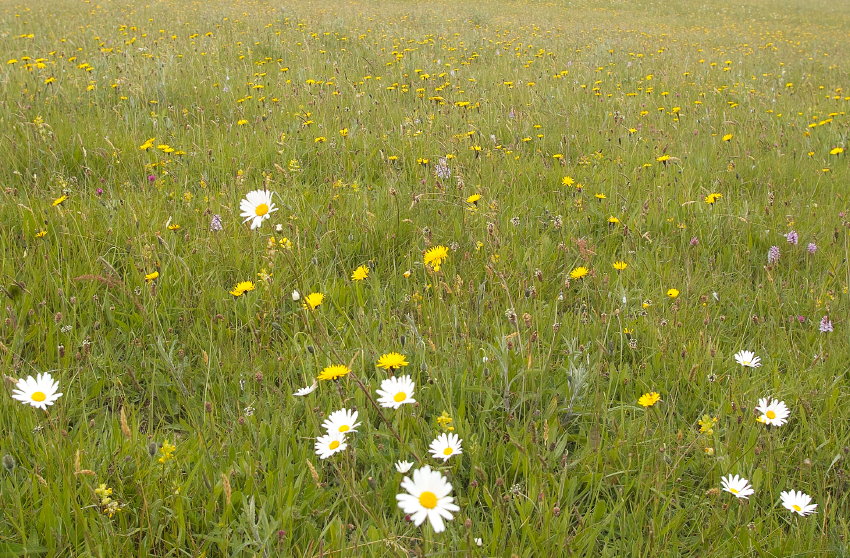
But this is why Anne’s birthday greeting is so brilliant. Meadowing should surely be an action word.
A pursuit, or activity, not simply a static noun. But what might this new word usage mean?
We have farms and farming – the activity related to managing the farm.
We have gardens and gardening – the activity related to managing the garden.
We have fish and fishing – the active pursuit and hunting of the fish.
But here’s the difference, and conundrum. To really ‘do’ a meadow well, it’s the reverse of these – there’s actually quite subtle and limited human interference or management. Sure there’s probably a cutting of grass and its removal once a year, and maybe some gentle controlled grazing for a few months.
But otherwise that’s it.
Sit back and wait. For years. And see what nature weaves and works into that tree, hedge, or ditch and bank framed canvas. And with what sublime skill.
So no ploughing or fertilising.
No planting or weeding.
No studying of flies, tackle or casting.
Just meadowing –
possibly … the slow, simple activity of spending time outside in a wild flower meadow. Whether working, observing, dreaming or just contemplating.
So meadows need enjoying in the green – and now’s the time to do it.
This new page on the website called Meadowing is for anyone else to add what they think meadowing means to them.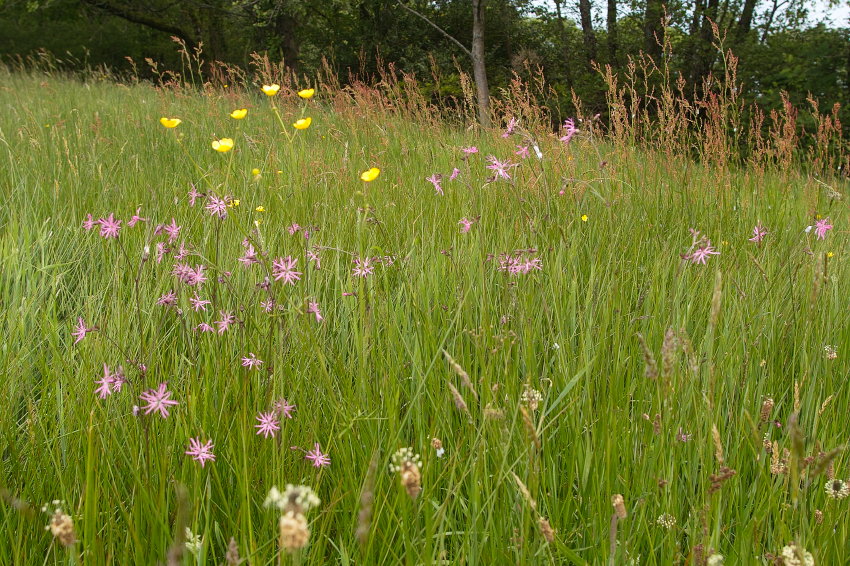
It might be a few words. It might capture just a moment. It might be a poem. It might be the flowers, or the birdsong, or the butterflies. It might be a song. Or a painting. Or a photo. Everyone’s experiences will be different, just as everyone’s meadows are subtly or dramatically different. I’d love to receive some old Welsh words pertaining to meadows and their making. And it’s also open to contributions from anyone around the country who has a love of these special environments, whether they own one, or just enjoy visiting one. Such shared experiences can’t fully match the delights of actually being there, but maybe they might encourage more people to visit a few meadows and see what they’re missing?
 So do email me (grumpyhobbit@gmail.com), if you’d like to share something of what meadowing means to you. And perhaps eventually meadowing will make it into a future dictionary, based on increasing usage of the word!
“Landmarks” even has a couple of blank glossary pages for one’s own word additions to be added. So along with meadowing, I shall add another new word to my copy…
Buttercupboozer. – another name for Micropterix calthella, or The Marsh Marigold Moth, the tiny bronzey metallic moth which delights in gorging on the pollen of creeping buttercups. Look out for them now.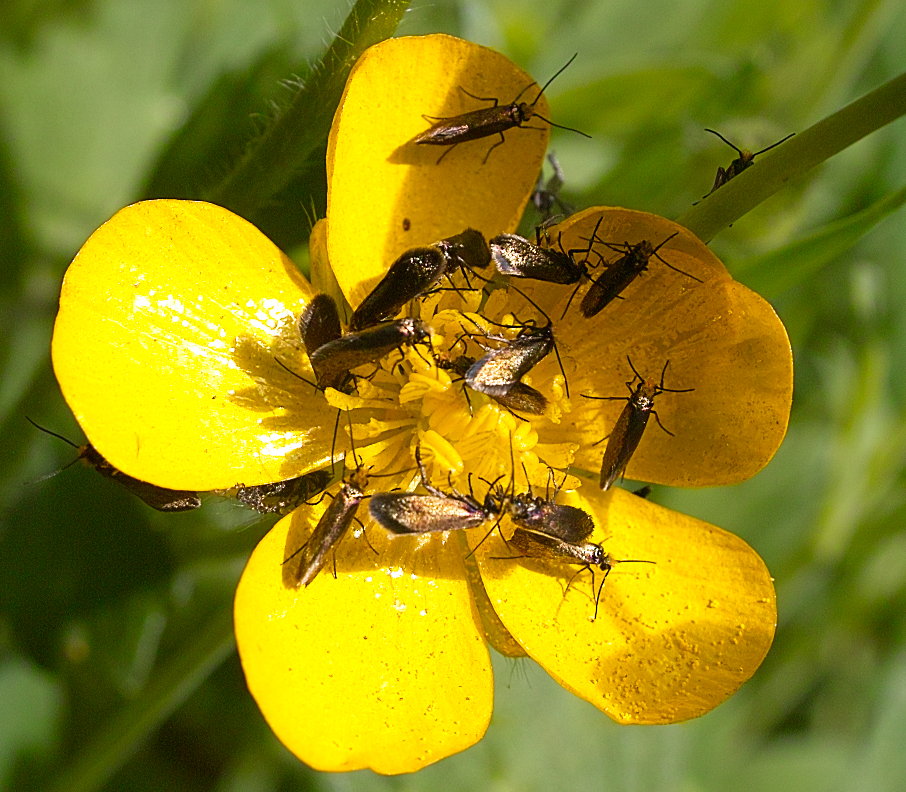
Thanks for reading. And enjoy meadowing!
(The above photos are from the amazing meadows at Cwmdu, enjoyed yesterday during a walk led by Isabel and Judith. Many thanks to them for a great day, and you too can enjoy the 2 mile circular walk on public footpaths. Click here for the map, and find the walk marked C, just north of Cwmdu).
JW 13/06/2015
 Carmarthenshire Meadows Group - Grŵp Dolydd Sir Gaerfyrddin