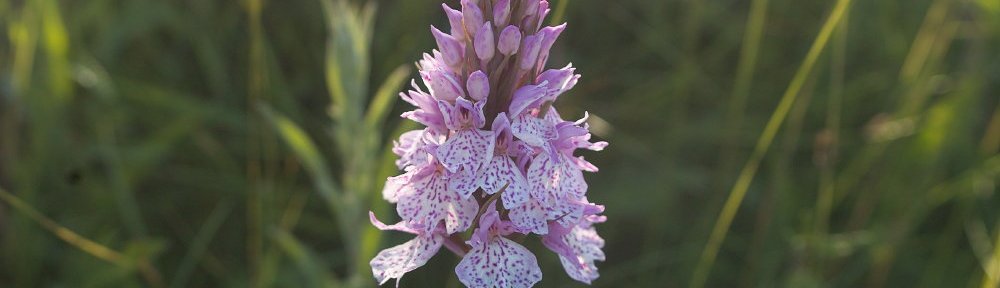
Very many thanks to Andrew Martin for the report below on the visit to the Carmarthenshire Coronations Meadow at Cae Blaen Dyffryn, on June 19th:
_________________________
On 19th June we attended the event organised by Plantlife at Cae Blaen Dyffryn, near Lampeter, in North Carmarthenshire. 
Around twenty people met up at a nearby school hall and having been welcomed with coffee and cakes by Helen Bradley of Plantlife, we heard a talk by Dan Merrett, the Coronation Meadows Project Manager. We heard how in each county of the UK, a “flagship” meadow has been identified to represent the once common flower rich grasslands of that area. The project then uses each flagship meadow to try to create at least one other in the same area.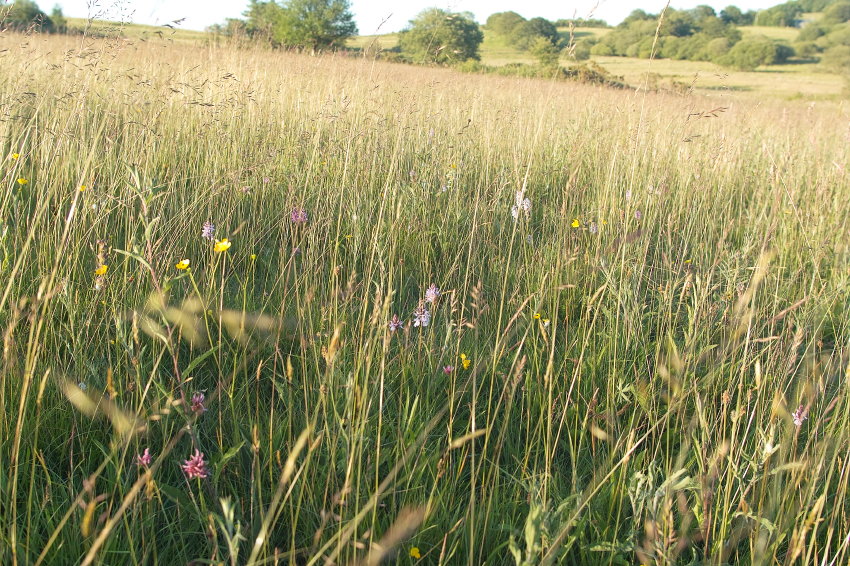 This can be done by either collecting green hay (an earlier than normal hay cut) from the donor site, and spreading it very soon after cutting (before it has time to heat up) on the receptor site using a muck spreader. It can also be done by brush harvesting seed and broadcasting it at the receptor site. For a good summary of these methods, look at the Coronation Meadow website here:
http://coronationmeadows.org.uk/conservation/loss-stats/
which includes good videos about the green hay method.
After the talk we were taken on a tour of Cae Blaen Dyffryn by Colin Cheesman, head of Plantlife Cymru. The site is a SSSI, and is owned by Plantlife Cymru. It is a sloping field, the upper part is well-drained, and the lower part is wetter, with areas of rush. On the drier parts of the field there are many species you’d see in many meadows, like yellow rattle, birdsfoot trefoil 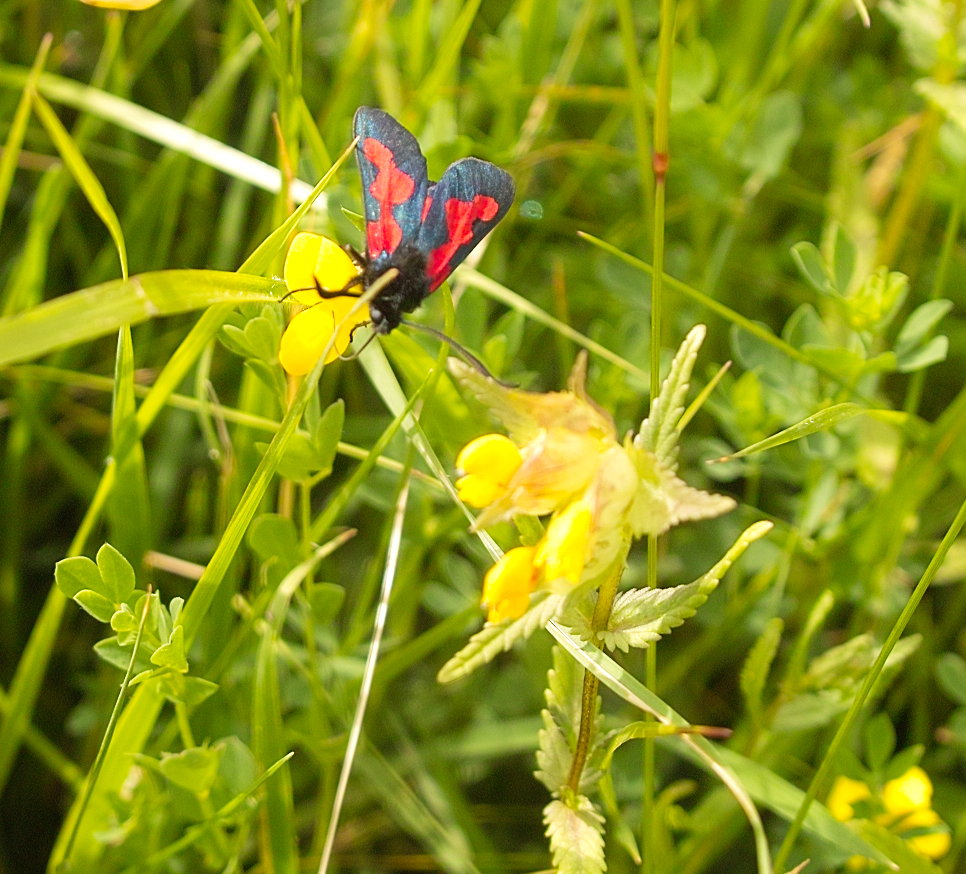 … cats ear…
 but also common species you tend not to see so much in meadows cut for hay, such as knapweed. We were asked to look out for another rare plant called moonwort, a fern, but although it is regularly recorded there we didn’t find one.
What tends to grab the attention are the orchids…
 We saw southern marsh orchid, and especially greater and lesser butterfly orchid (we saw both in huge numbers – annual counts are in the thousands on this one field). We were shown how to distinguish greater (more common) and lesser (less common) butterfly orchids by comparing the pollinia (masses of pollen transferred to a pollinator during a visit).
 The greater has them in an arch like the rafters in a crook barn, whereas in the lesser they are closer together and parallel.
In the lower part of the field there are tussocks of purple moor grass, and plants that prefer the wetter habitat such as ragged robin and whorled caraway (Carmarthenshire’s county flower).
The site has not been mown for a very long time, and is managed by light grazing with cattle and donkeys. It was a privilege to see it, and it is well worth a visit. For how to get there, and where to park, look at plantlife’s website:
http://www.plantlife.org.uk/nature_reserves/cae_blaen-dyffryn
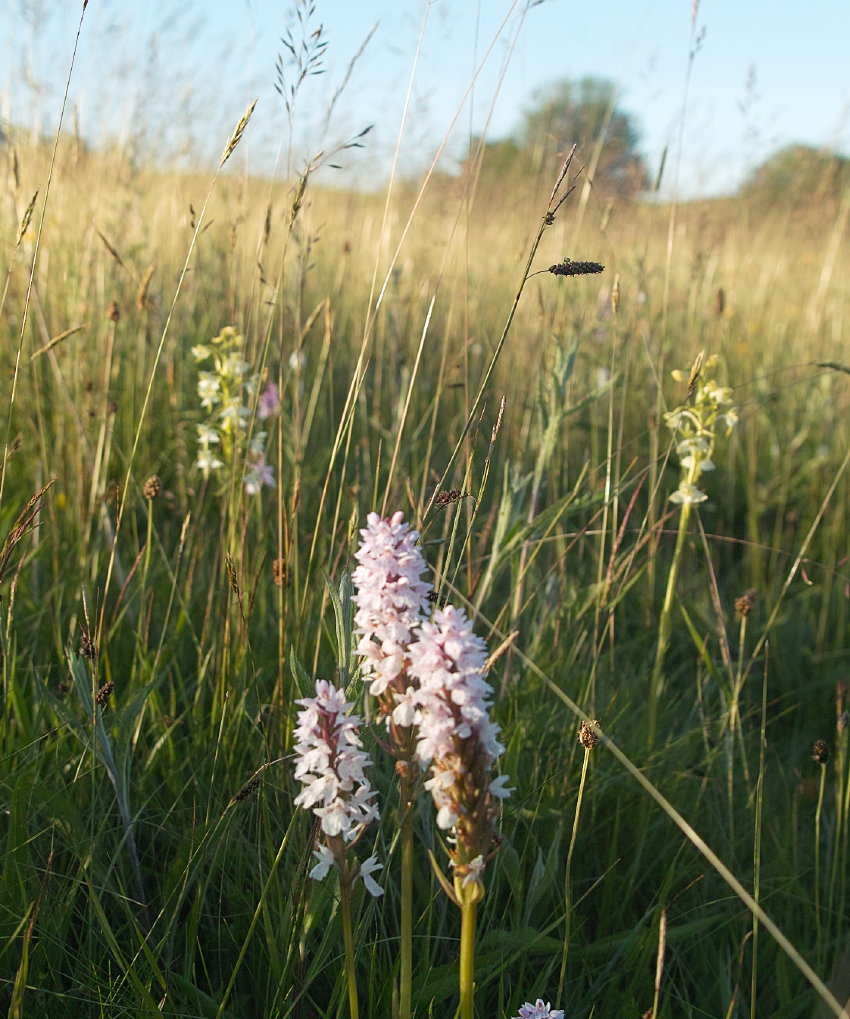
Thank you to Dan Merrett, Colin Cheesman, and Helen Bradley for a very enjoyable and informative couple of hours.
________________________________
Thanks also to Isabel Macho, and Jan Sherry for this information on a new scheme organised by Pont to encourage the exchange of hay and manure..
PONT was asked to set up a Hay Exchange on our website, which the Welsh Government kindly agreed to support through our core funding grant.
The aim is to help people who need or want hay or farmyard manure to get in touch with each other. This will support people who are creating and managing traditional hay meadows by finding an outlet for their products.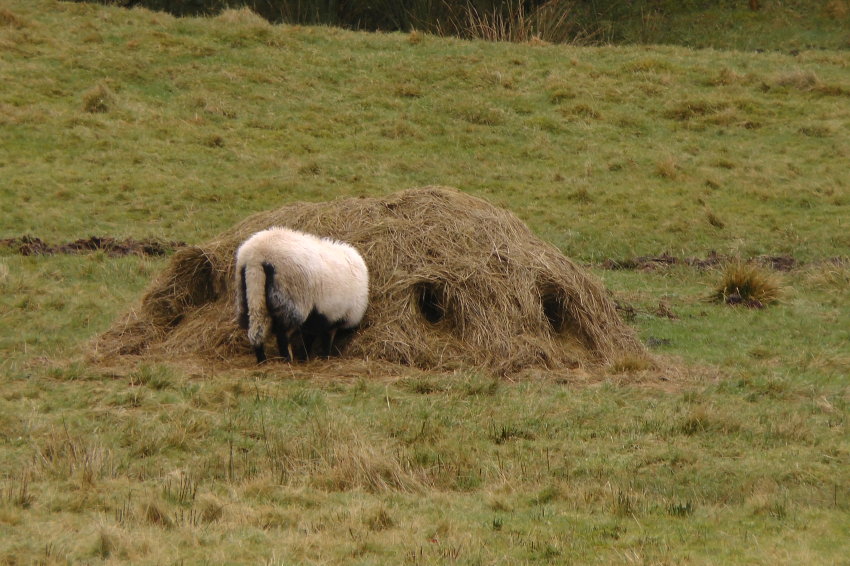
The webpage http://www.pontcymru.org/en/pont-hay-exchange/ has a registration system where people can enter the details of what they have or what they need. This includes information about the type of meadow e.g. flower-rich, organic etc. and the type of bales etc.
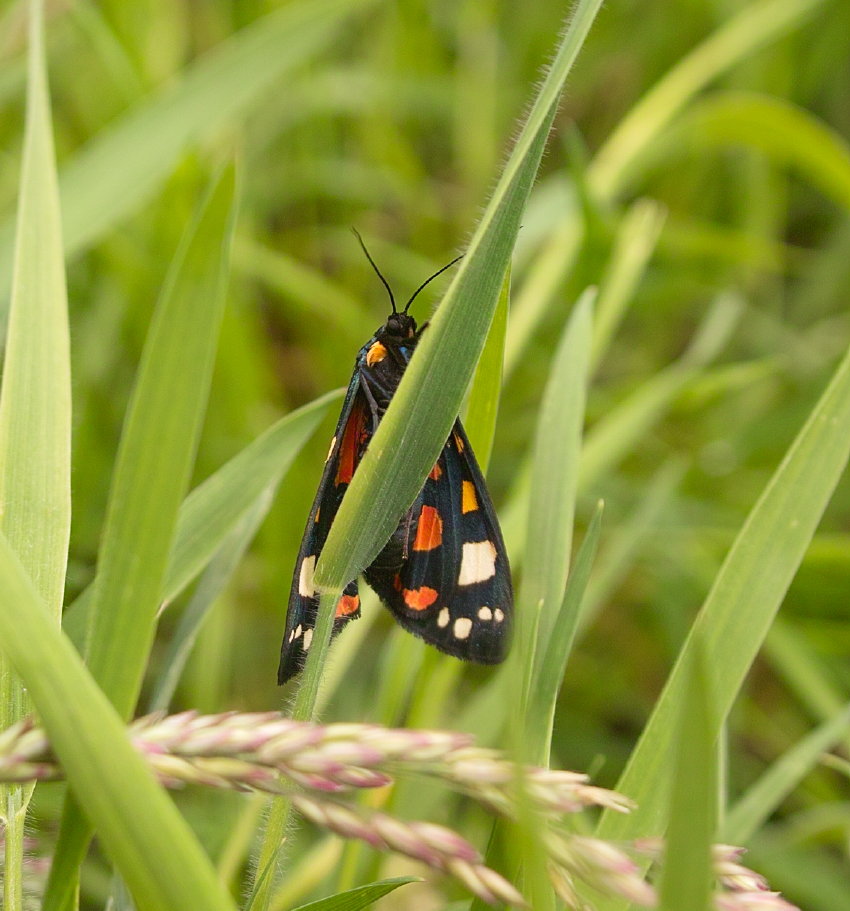
Finally a reminder to look out for insects, as well as flowers in our meadows at the moment. Whilst thumping in some fence posts 10 days ago we narrowly missed treading on this recently emerged Scarlet Tiger Moth, Callimorpha dominula…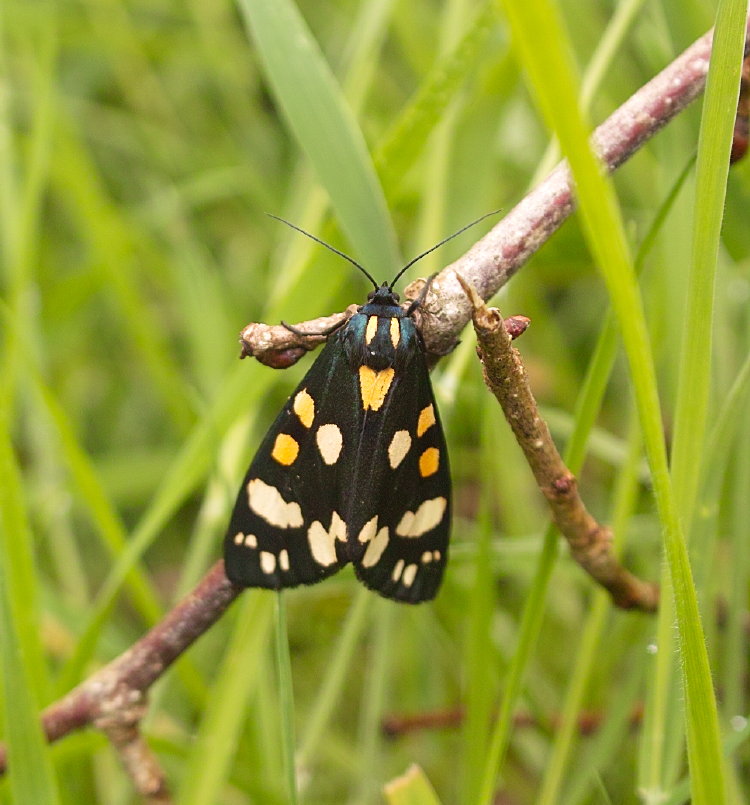
Thanks for reading.
 Carmarthenshire Meadows Group - Grŵp Dolydd Sir Gaerfyrddin