Wednesday June 29th saw a group of hardy meadow enthusiasts gather at Newton House for a “summer social”, kindly organised by Isabel Macho, and Helen Bradley of Plantlife.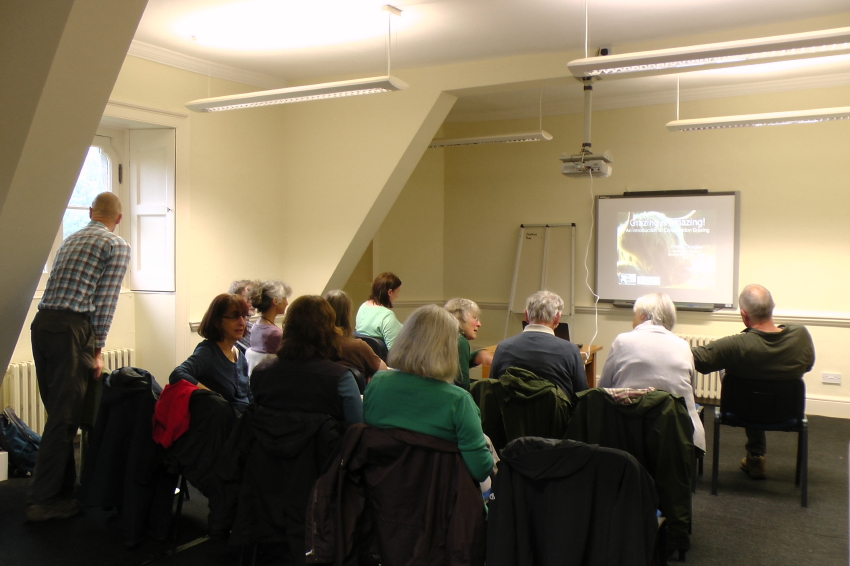
Beginning with a couple of talks on the top floor of the historic venue, the miserable weather was forgotten as Emma Douglas discussed the benefits of conservation grazing as part of the management approach to encouraging biodiversity in our meadows. Stock options, breed selection and using external graziers were all covered, as well as some of the other aspects of grazing management that PONT can help meadow owners with – including schemes to promote the marketing of animals reared in a more traditional way on florally rich meadows.
After an interesting discussion, Colin Cheesman, Head of Plantlife Cymru, gave a broad review of the different types of meadows found throughout the UK, and the acreages of each category still present both nationally and within Carmarthenshire. (acid, neutral, calcareous). He also made the very valuable point that every meadow is a unique entity with its own blend of species. He referenced the Ellenberg database now available on a website which can be helpful for discovering the optimum growing conditions for every plant which you might find in a meadow environment…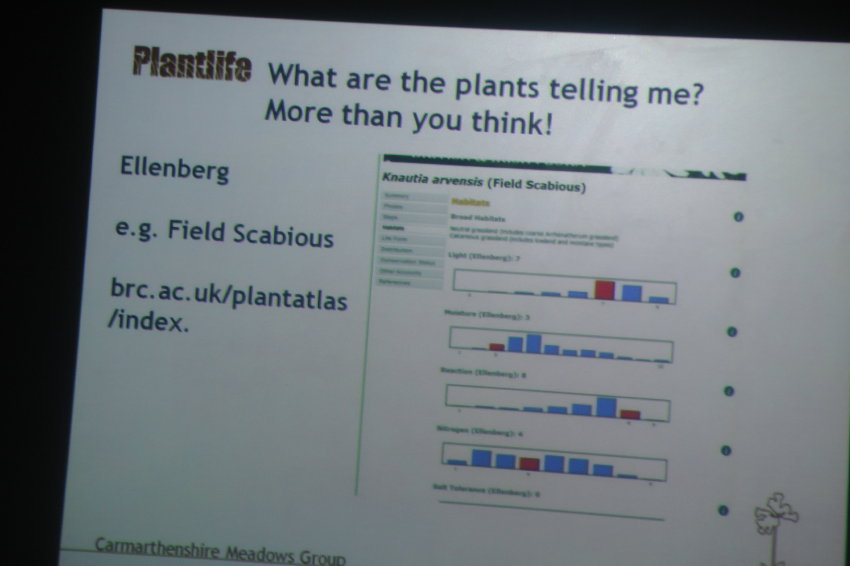
Colin continued with examples of the different types of plants found within each meadow category, as well as mentioning grassland fungi, and in particular the spectacular waxcap mushrooms found in many sites in Carmarthenshire. Plantlife are currently planning a survey into waxcap meadows, and Colin is interested in finding more suitable meadows to explore. So if you know of a meadow where waxcaps grow, consider getting in touch with Colin : colin.cheesman@plantlife.org.uk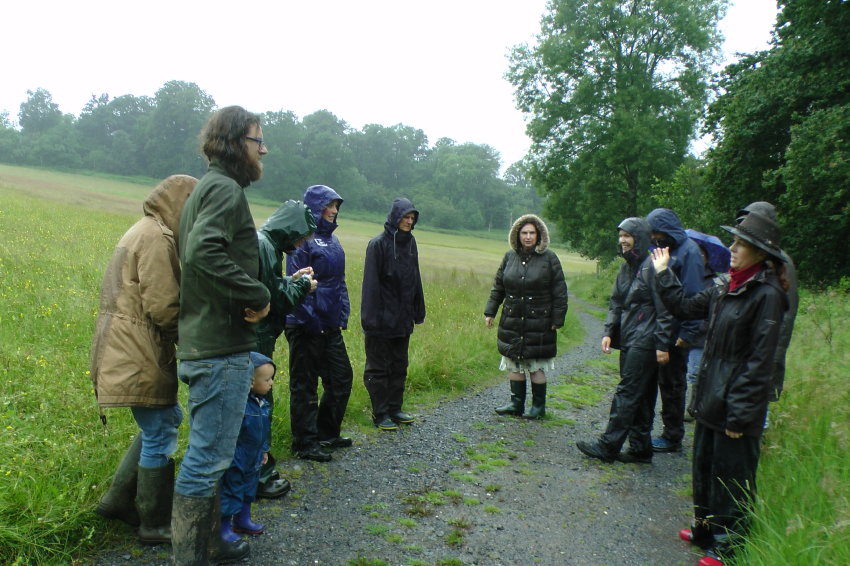
After a break for coffee and cake, we donned waterproofs and wellies and headed out into the parkland with Sarah Jones, one of Dinefwr’s rangers, who walked us to the castle meadows. These are being managed sympathetically to encourage floral and invertebrate diversity. 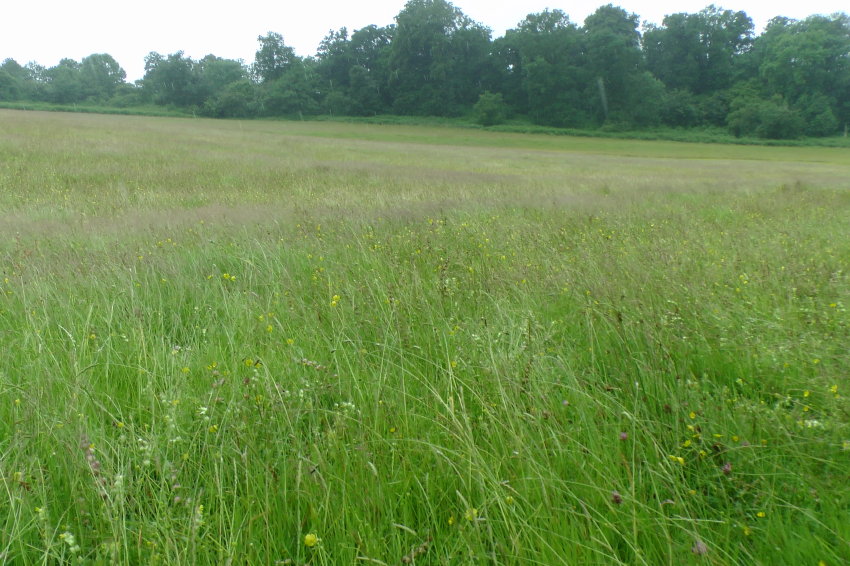 This includes taking off a hay crop, and winter grazing. Cows have been used in the past, but because of public access to the meadows, they now just use sheep. Sarah also pointed out the oldest oak on the property which is thought to be at least 800 years young…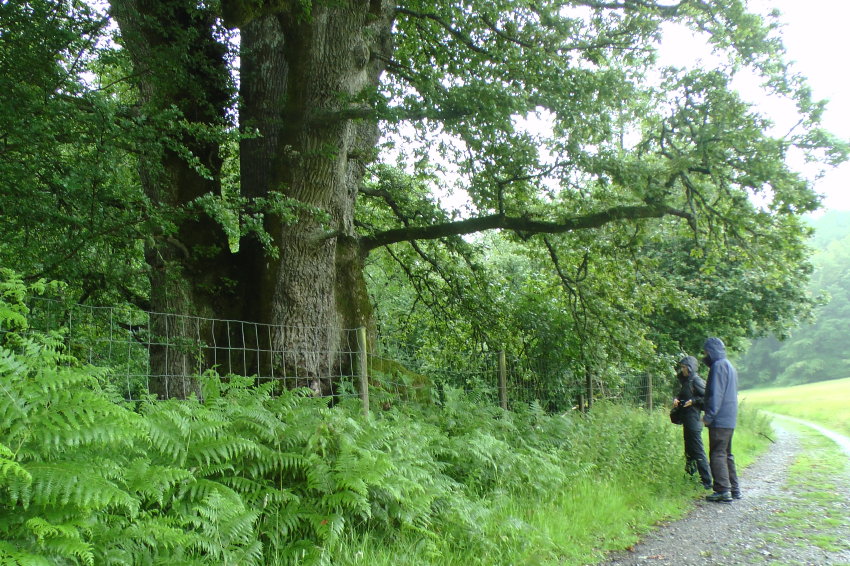
In spite of heavy rain we could all appreciate the range of flowers and grasses present and the highlight was seeing a couple of spotted orchids, fortunately close to the main track through the site. 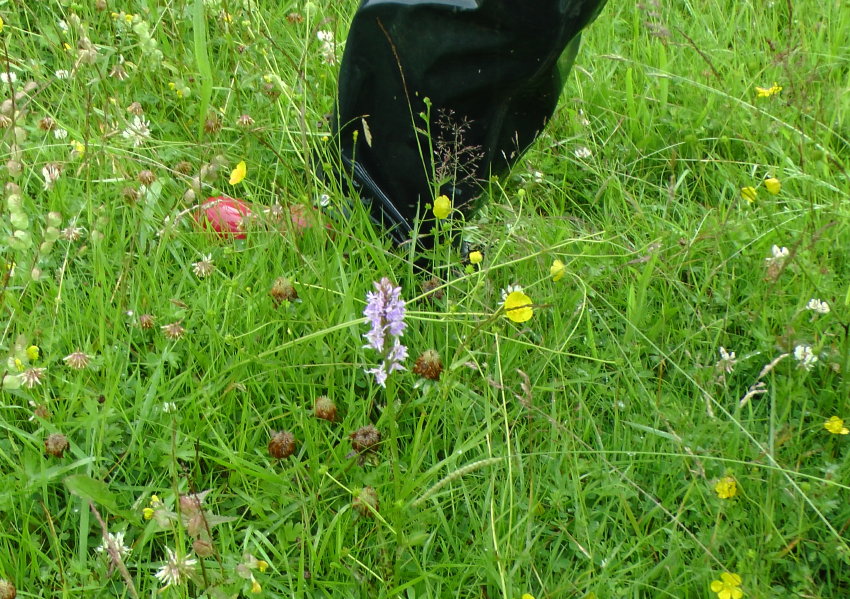
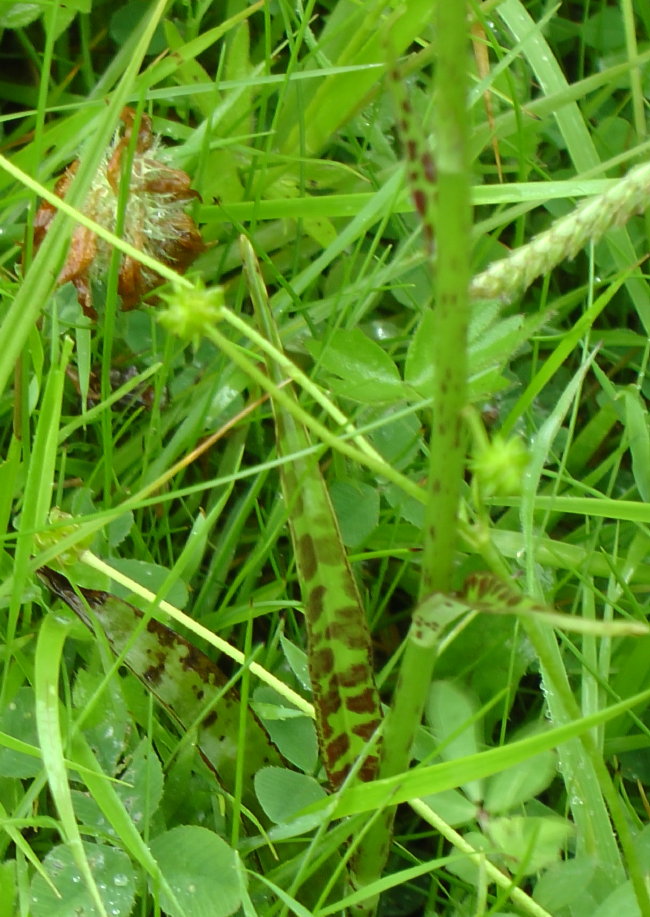 Though a little soggy by the end…
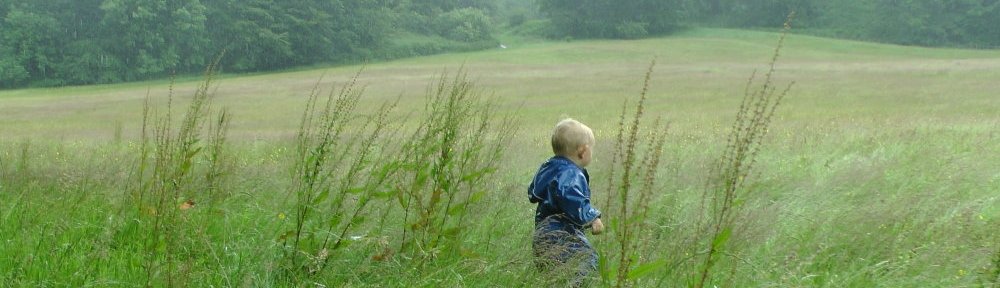
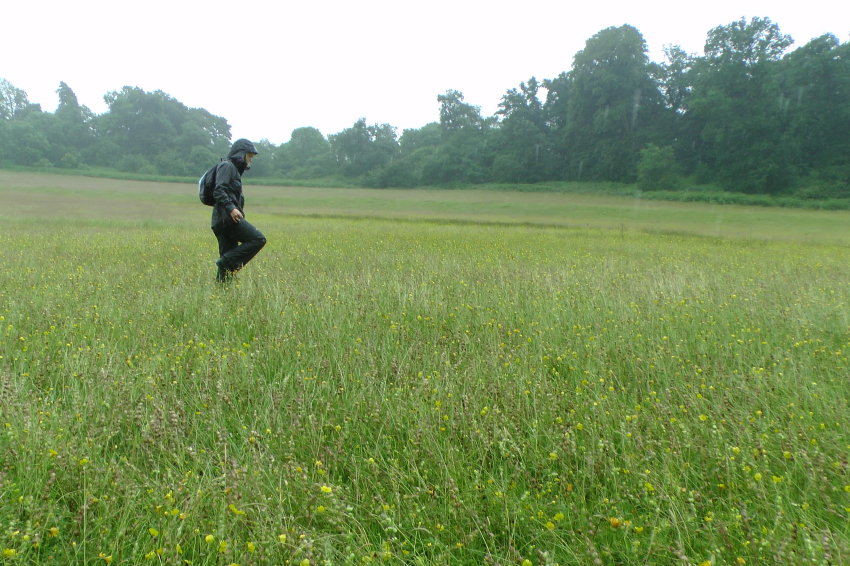 … even the youngest member of the group clearly enjoyed the visit hugely…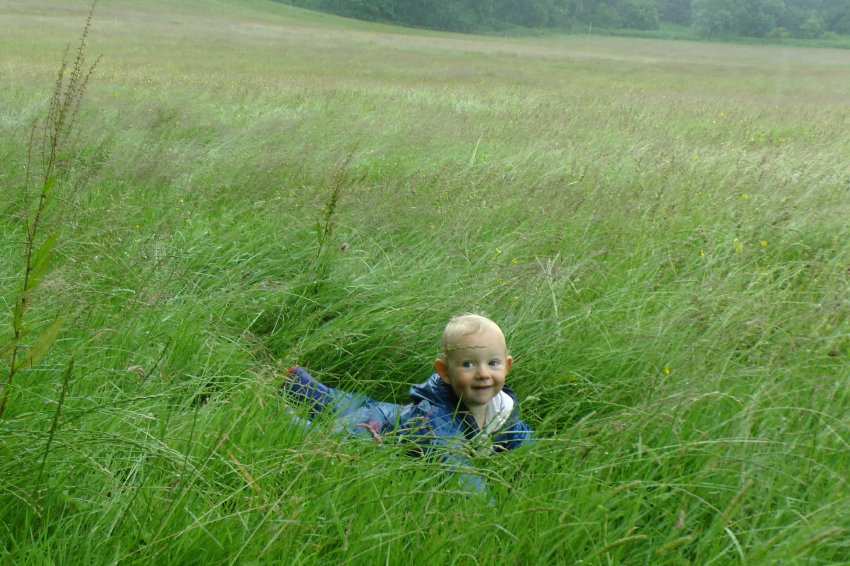
There is much more to see at Dinefwr, with its White cattle, deer, castle and rich history.
Click here for more.
Many thanks to Isabel, Helen, Emma, Colin and Sarah for staging a very enjoyable event, at this special place. As the text in the cafe reads …
“If you take a handful of the soil of Dinefwr, and
squeeze it in your hand, the juice that will flow,
from your hands is the essence of Wales”
Wynford Vaughan Thomas
Thanks for reading.
 Carmarthenshire Meadows Group - Grŵp Dolydd Sir Gaerfyrddin