Many thanks to Andrew, for this report on what sounds like a brilliant day’s course at Denmark farm last week:
Rapid Assessment: a Survey Method for Monitoring Meadows
This was a one-day course run by Plantlife at Denmark Farm, near Lampeter on 8th June 2017. Several people from Carmarthenshire Meadows Group attended, as well as others from elsewhere in Wales and England, some from far away (e.g. Lancashire).
Rapid Assessment was created as a method of assessing whether the species-richness of a site is being maintained, or is increasing, or as an early warning system if a site starts to decline in condition, and as a prompt to implement some appropriate management action.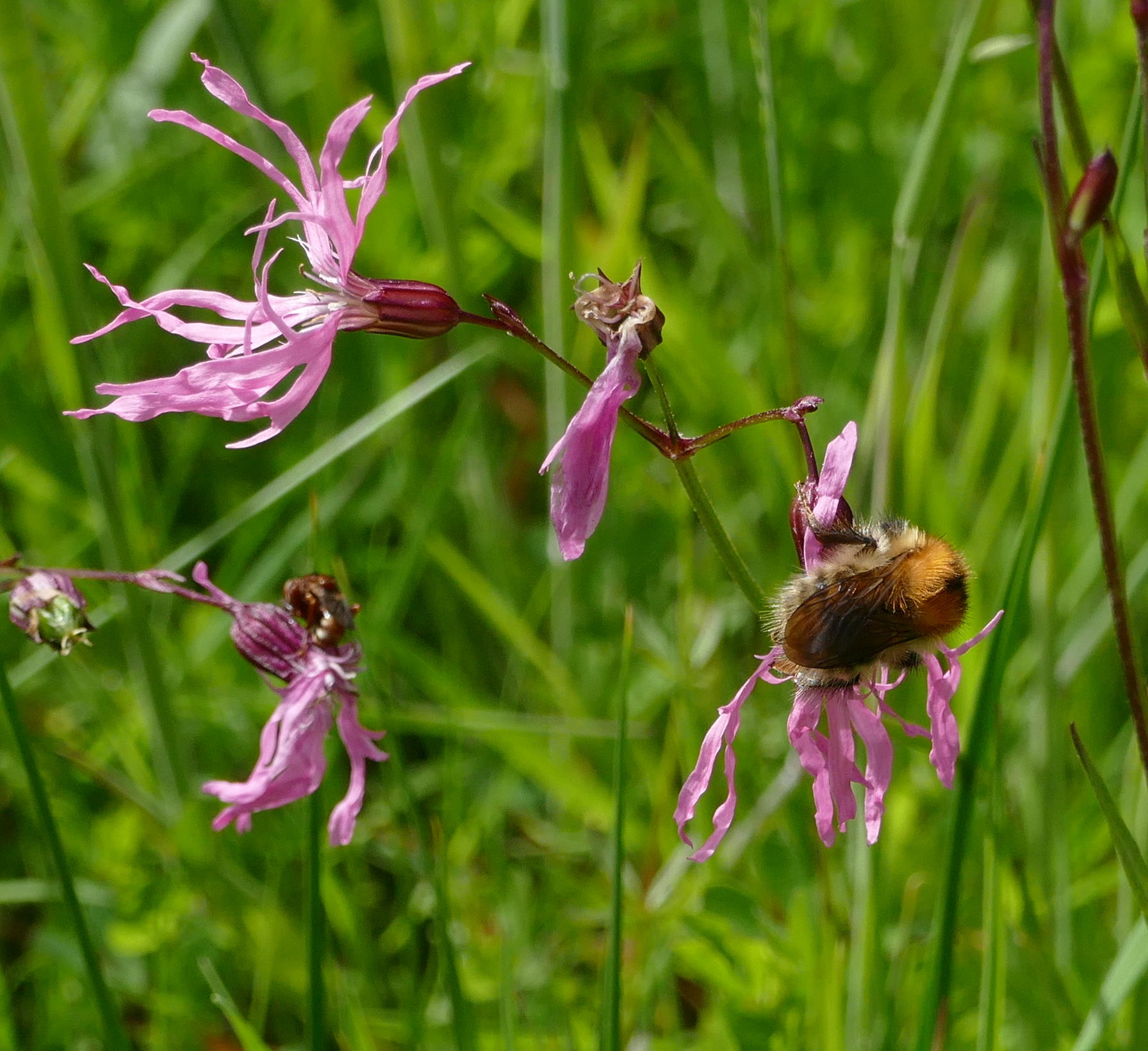
It is a useful survey method to assess the status of individual grasslands and can be tailored to whatever indicator species may be present. It is a good method for surveyors inexperienced in species identification, although care has to be taken in choosing which indicator species to use. It isn’t a method for monitoring the whole botanical range of the grassland in question, but it is (once the choices have been made about what to record) a quick way of assessing a meadow’s condition, and especially monitoring change over time.
For an established meadow, with stable management over a long period, a Rapid Assessment survey (RA) should probably be done every 3 years or so, to check that all is well. But on sites that are being restored from earlier management such as intensive grazing, or being reclaimed from scrub, or especially on sites that have been newly sown, monitoring every year would be more appropriate.
The method uses sampling at 20 or so quadrat points in the field, either in a regular grid or by stopping at regular points on a “W” walk back and forth across the field. At each sampling point, within the square metre of the quadrat, the presence or absence of common indicator plants is recorded. There are “positive” indicator plants, i.e. those that we would like to find in a grassland, and “negative” indicator plants, those that we would not want to find. As it is usually a presence/absence method and only uses a small number of indicator species, RA is ideal for anyone that has not done much botanical surveying previously, and it’s very quick to do once the survey form has been designed. The trickier part is identifying the +ve and -ve indicator species for the grassland in question, since every site is more or less unique.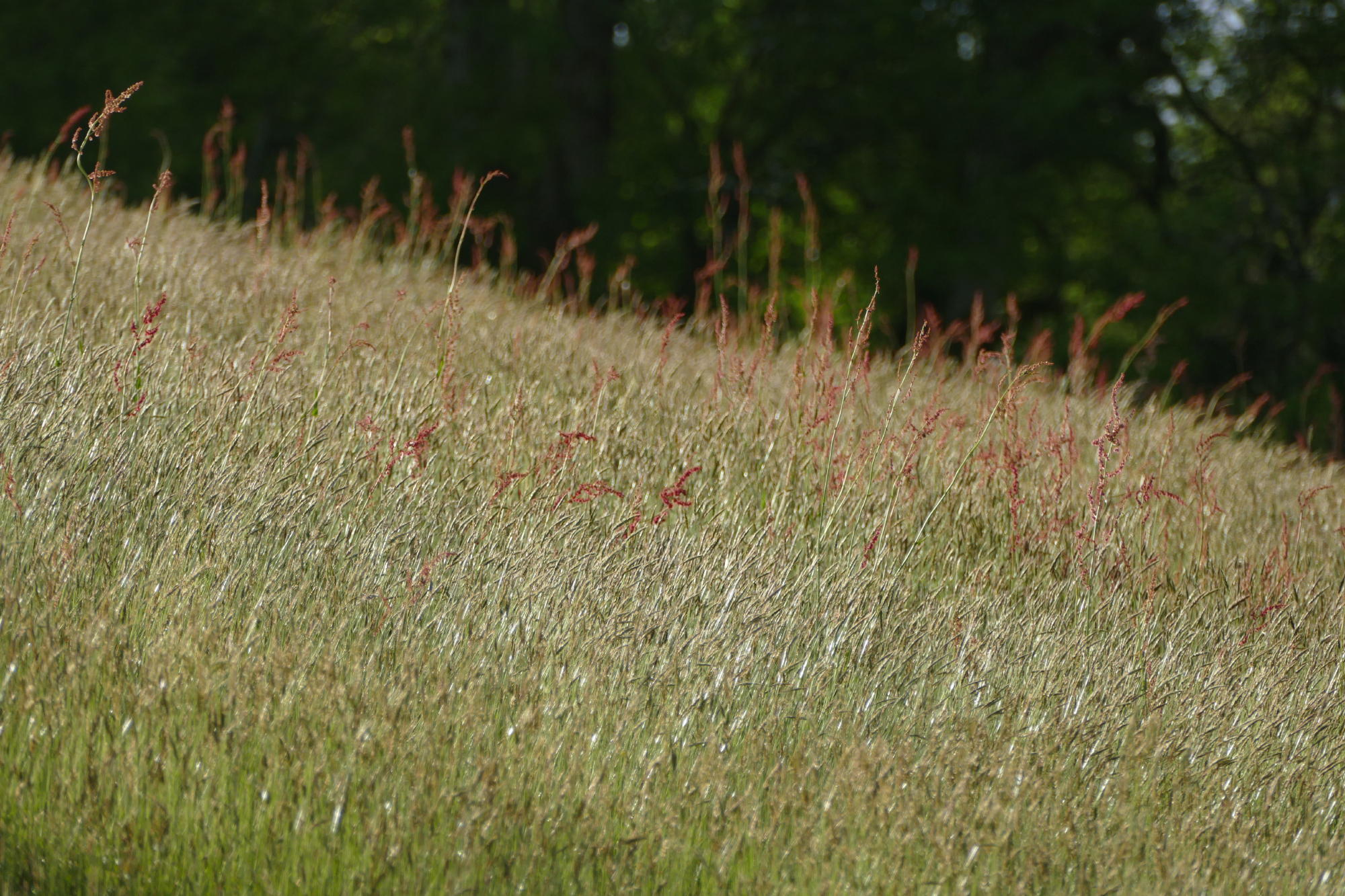
As well as the presence or absence of these species, at each sampling point you also record yes/no answers to some other questions, such as “Is the cover of herbs (vascular plants other than grasses, i.e. wildflowers) more than 40%?”; or “Is the cover of scrub seedlings less than 5%?”
At each sampling point in the field, all the records are in the form of yes or no answers, or for ease of filling it in on a spreadsheet, 1 or 0. The rows and columns can be totalled to give a snapshot of the condition of the site at the time of the assessment. In isolation, this might not be that useful, but when repeated in subsequent years, it will show change (either for good or bad) which might not be obvious by just looking at the field. 
A detailed guide to how to do this useful method, as well as how to interpret the results, can be found here:
with useful advice on how to choose indicator species on various types of grassland.
It was a very interesting and thought provoking day, and I’m sure all who attended it thought it was thoroughly worthwhile.
____________________________
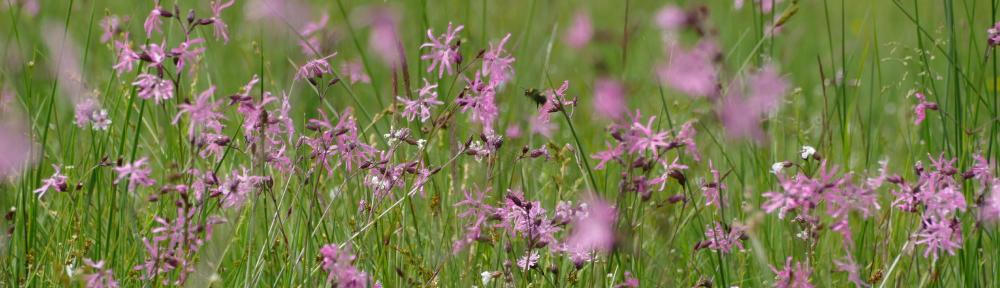
As a follow on from this piece by Andrew I wonder if other readers are noticing significant changes in their meadows from year to year? Since we’re still fairly early on in our progress of restoring floral diversity in our meadows, it’s easier to spot changes here. Like lots more Ragged Robin in our wet meadow. ( 3 years on from total soft rush)… 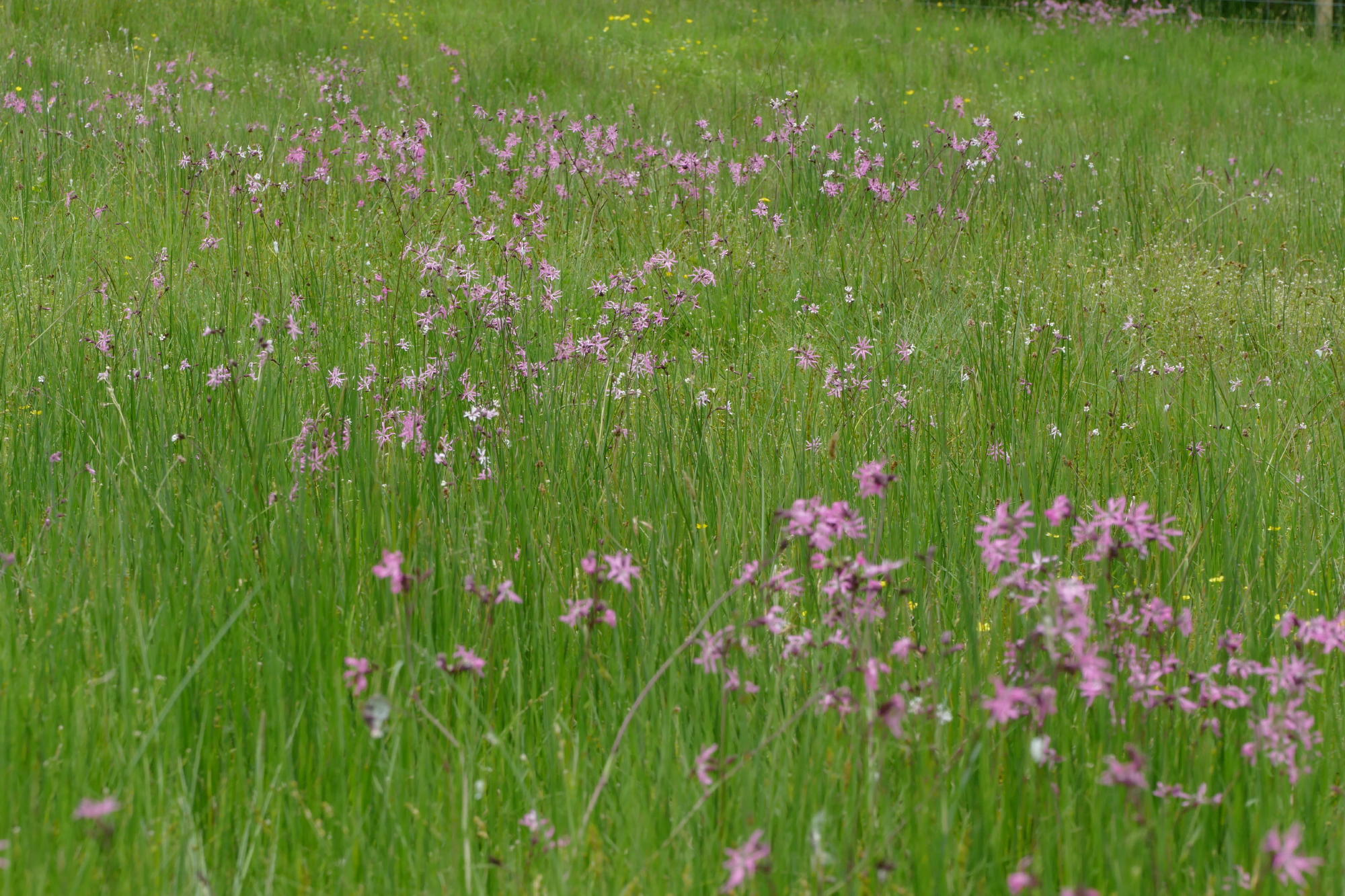
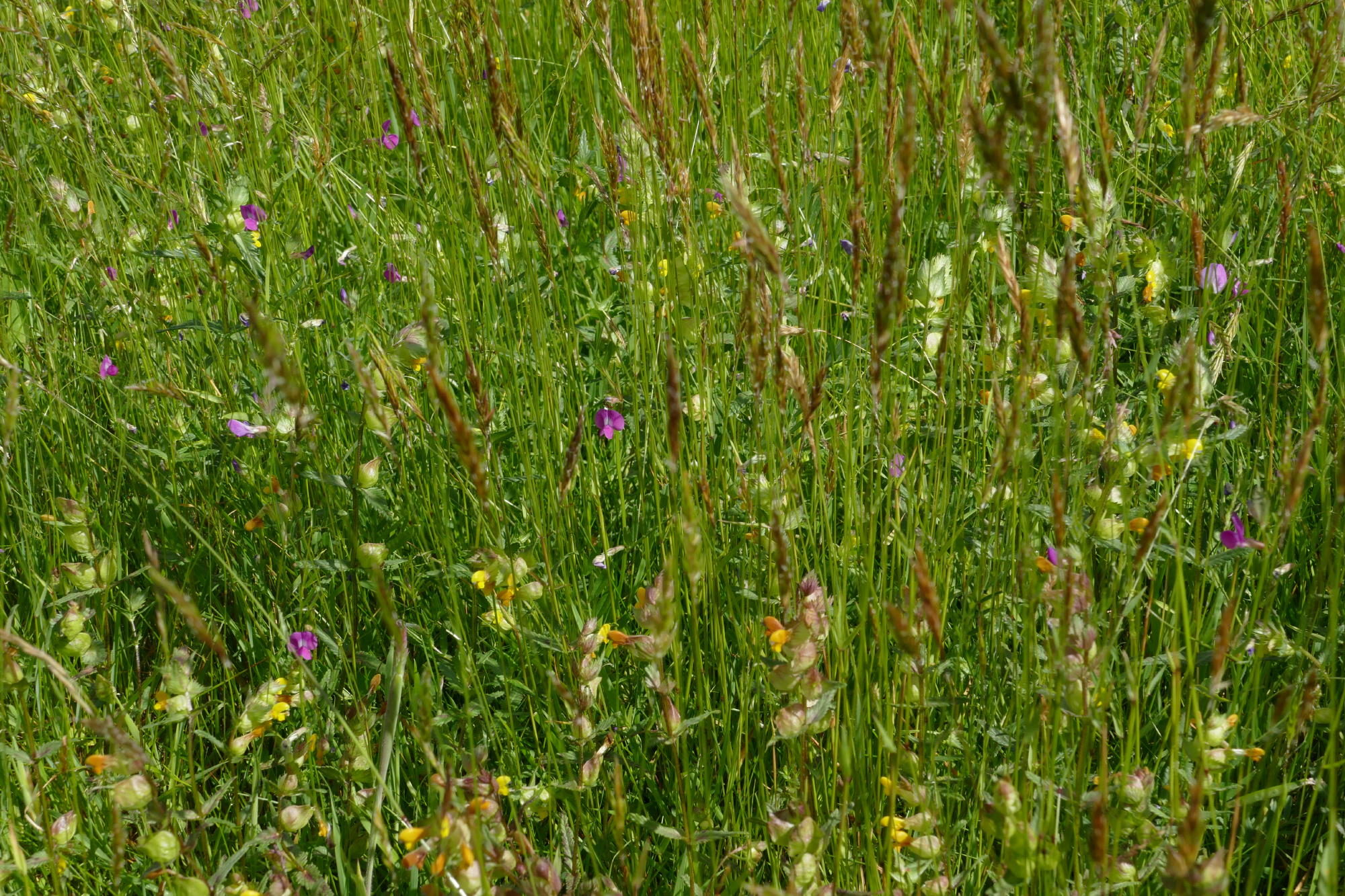
… and from just 2 orchids last year, 11 in 2017 so far, just 5 years from starting our “restoration” project in our sloping hay meadow… 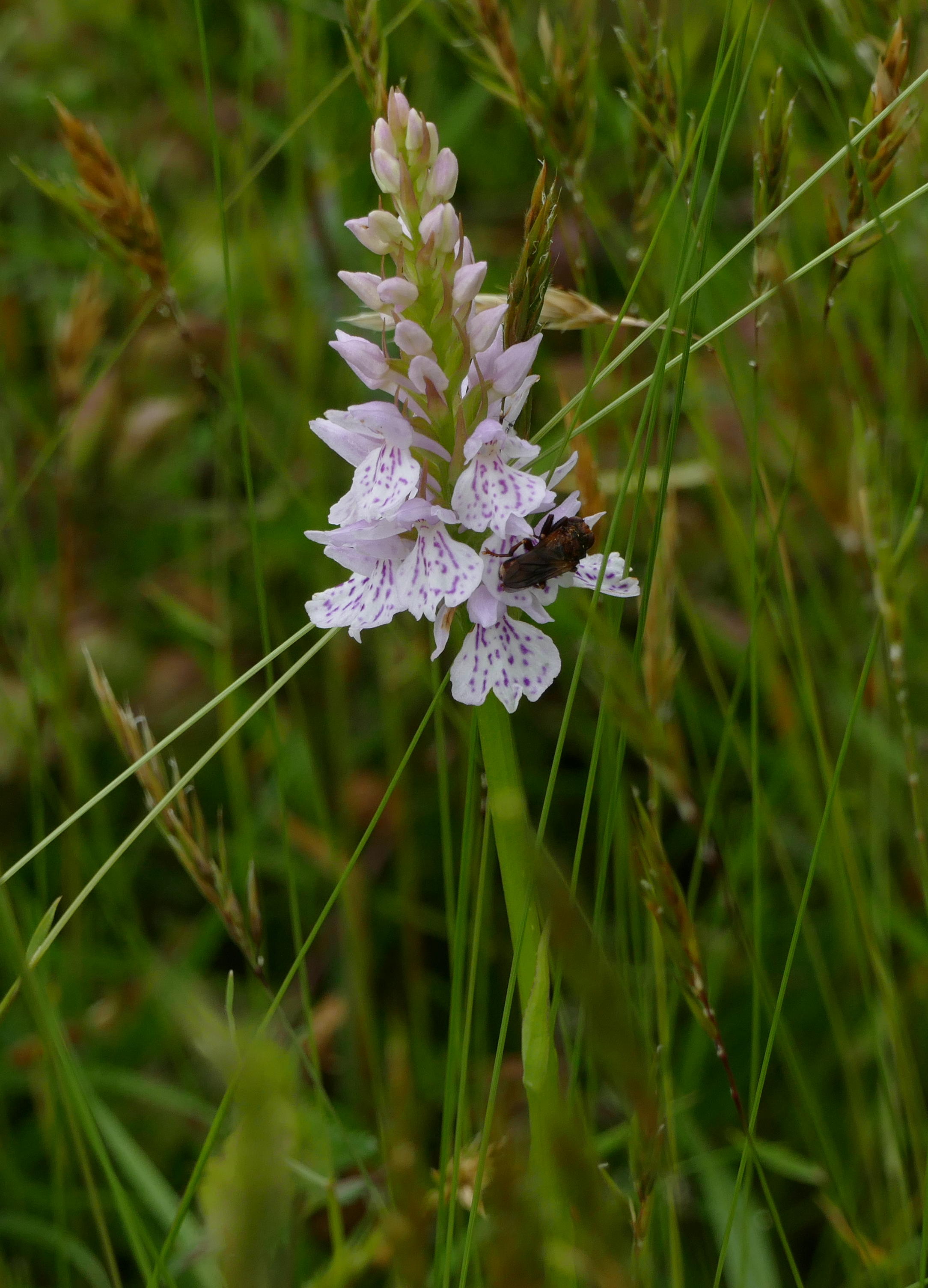 This year in our hay meadow the now universally distributed yellow rattle seems to have completely suppressed both creeping buttercup and greater bird’s foot trefoil.
 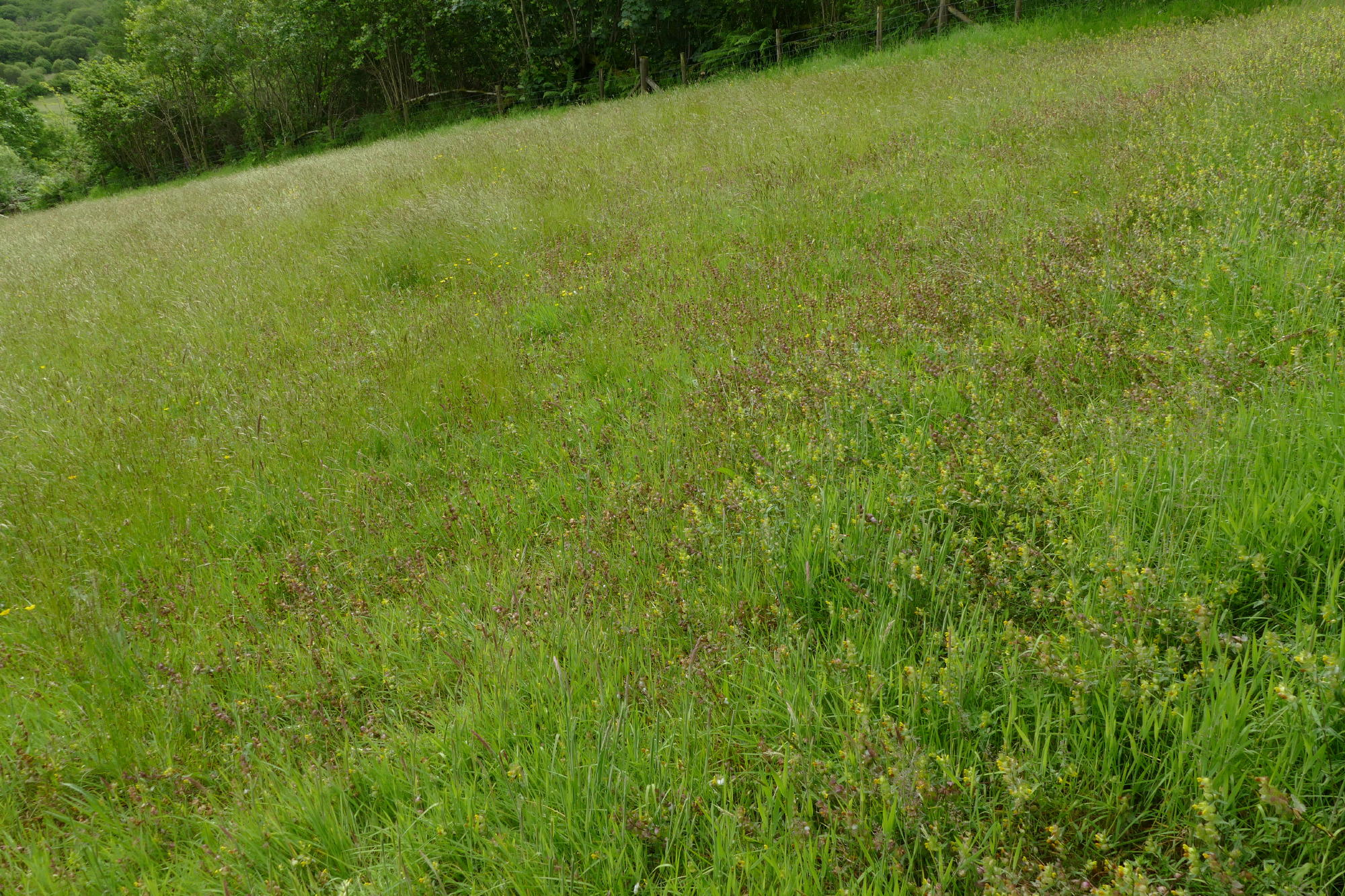 There could be other reasons, but in our lower meadows the Greater Birdsfoot Trefoil is looking as vigorous as last year, as indeed are patches of Creeping Buttercup which is flowering profusely there. (Common, and smaller) Bird’sfoot Trefoil seems unaffected by the yellow rattle, as does Bitter Vetchling and Meadow Buttercup…
 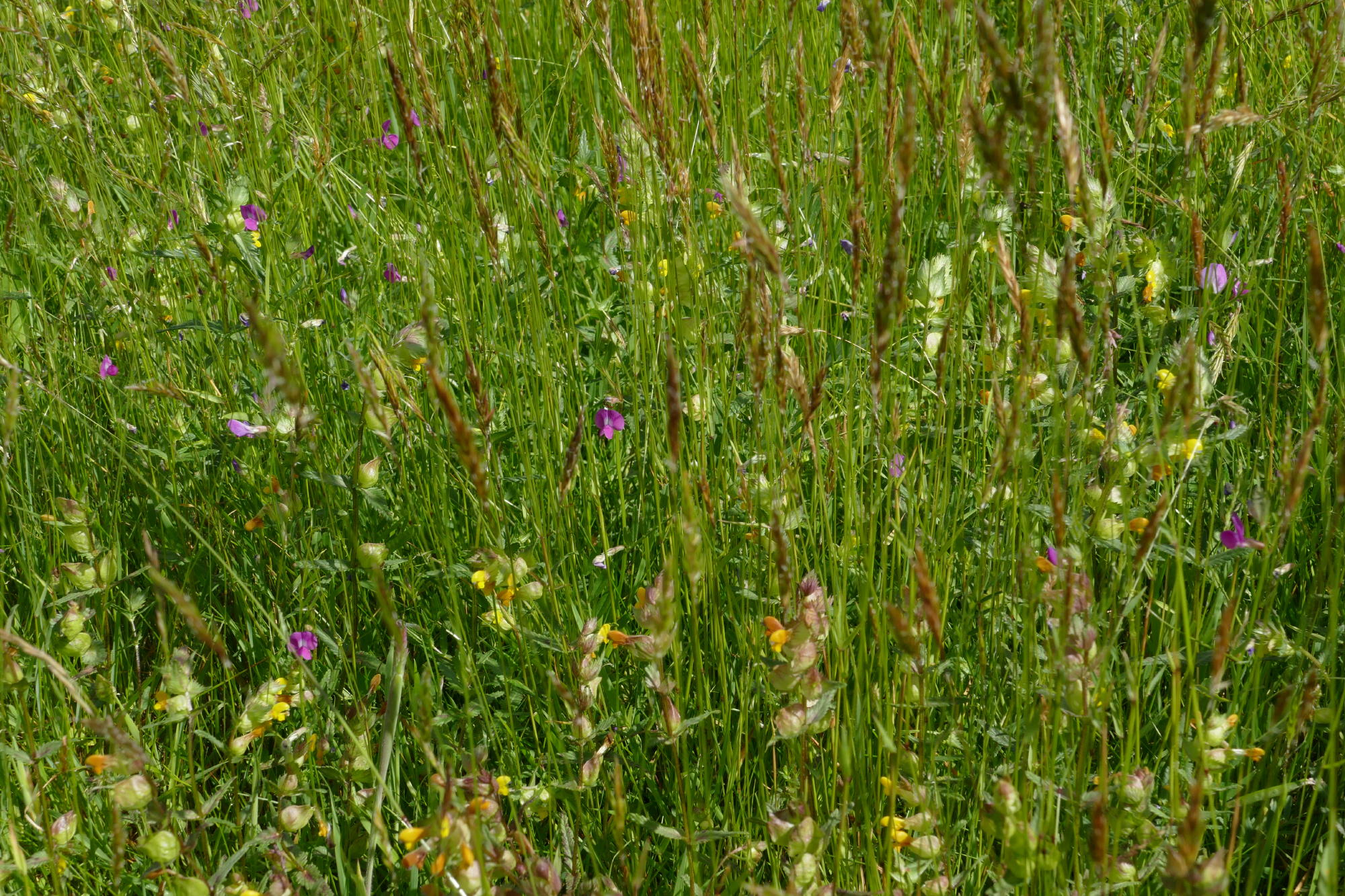 I also get the impression that the vigour of the currently limited pink clover in this field has also been reduced a bit. Have others noticed this sort of dramatic year on year impact on other species after the introduction of yellow rattle? Or is there some other reason for what I’ve noticed? Might it be fungal effects below ground co – incident to the yellow rattle? Or in some way linked to different weather impacts over the last year? I guess we’ll never know, and it will look different again next year, but it is a very striking change.
____________________________
A reminder for all attending the meadow walk at Cwmdu on Wednesday June 21st, to arrive in the car park at Cwmdu in good time to start our walk at 10.30 am. There are still a few places available if any other CMG members would like to join the group with Richard and Kath Pryce as our expert botanist guides. The meadows we’ll walk through should be looking really good, and very varied at this time of year.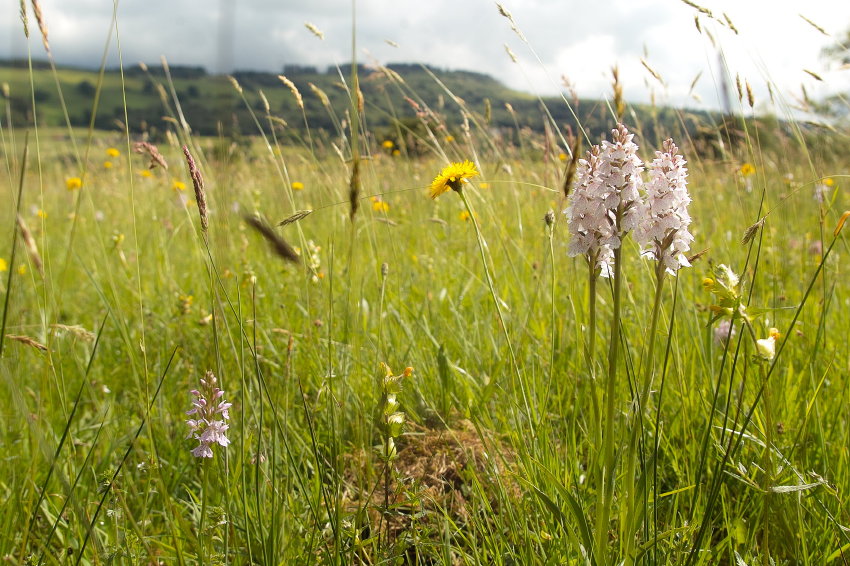
_________________________________
Finally after the information on Dormice in the last post Isabel has kindly sent me additional information, distribution and images about Dormice in the county, which you can access by clicking on the text below:
______________________________
Thanks for reading, and remember I’m always happy to receive any suitable articles or photos to include as blog posts. Please send them to me…
Julian Wormald… website@carmarthenshiremeadows.com
 Carmarthenshire Meadows Group - Grŵp Dolydd Sir Gaerfyrddin