Many thanks to Julian for this interesting post:
An idea for anyone with a few acres, a few livestock, and some rhos pasture.
For the last couple of years, we’ve tried to cut the wet, peaty zone of our lower hay meadow, (which is never cut during summer), in the late spring in one of the extended spells we always get in late February or March.  And use this as an excellent soft, absorbent bedding material for our lambing pens. So we never need to buy in any straw.
 Except this year we haven’t had any such dry spells, so we exhausted our bedding and had to shift to old leftover hay from our 2022 harvest.
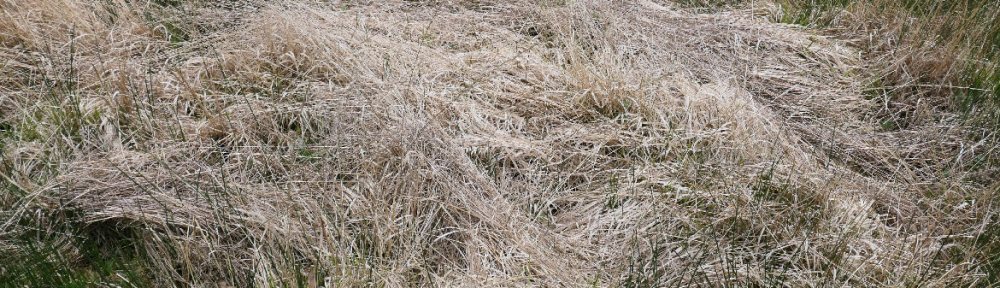
The purple moor grass, Molinia caerulea, which yields the wonderful bleached dry leaves by late winter and is so typical of such ‘rhos’ pasture, has now begun to grow its new season green leaves. And the ground is still too wet for our BCS power scythe to take into this area.  However, a chance manual pull of some bleached leaves as I walked past a few days ago, showed that they were very loose. A trial raking out of an area with our wooden hay rakes followed and was so successful, that we quickly managed to cover most of the area, and in so doing have a store of well over a year’s worth of bedding for next year.
 The bags will be emptied in the now cleared space in one of our hay sheds – minimal effort, gentle exercise, a useful by product of an ‘unproductive’ bit of land, which eventually gets recycled once more after rotting down in a muck heap as a turf suppressant or mulch in our daffodil/crab apple/Sorbus copse, prior to bulb planting, as illustrated.


Even better, by removing this dead material from the rhos pasture zone of the meadow, it’s allowed the great diversity of flowering plants – Valerian, Meadowsweet, Celandines, Marsh Violets, Devil’s-bit Scabious, Lady’s Smock, etc. which are growing amongst the moor grass, to suddenly see the full light of day. They can now grow away more easily at this critical time of the year.


With rain returning again, there’s probably still time to do this – the bleached material on the surface of the tussocks is completely dead and dried out – it just needs a couple of dry days for rain or dew to evaporate. No need for turning, like hay.
 Carmarthenshire Meadows Group - Grŵp Dolydd Sir Gaerfyrddin