Unknown's avatar

About thegardenimpressionists - Julian and Fiona Wormald

Julian and Fiona Wormald met and married while still at university - quite unconventional, even back then. Shortly after qualifying we established our own veterinary practice in Bristol, soon opening a second. We also set up a high-end prepared chilled meal service from our home for a few years, complete with off-licence wine options. (We hate being idle, and have lots of ideas, some of which don't work so well!) We ran the original practice for over 20 years although after 11 years had bought a derelict property in West Wales for a new challenge. 12 years after this purchase, we decided to 'jump off the wheel' and sell our practice, relocating to West Wales having gradually restored our longhouse home and begun making a garden and wildflower meadows surrounding it. And after realising that there was more to life than chasing income. We began opening the garden for charity, for the National Garden Scheme in 2010. About 14 years ago we started "The Garden Impressionists" and soon set up our website and blog to record and discuss our current ideas. Our principal gardening influences over the years have included the gardens and writings of William Robinson, Claude Monet, Beth Chatto, Christopher Lloyd, Fergus Garrett, and Noel Kingsbury. Incorporating some of their thoughts and philosophy into our own garden, alongside our own ideas of what is important for this location and climate, has kept us physically and mentally challenged as the garden has developed - and as time has passed, age increasingly influences decision-making.

DIY Meadow Management – Hay Making at Ffos y Broga, 2015

Gallery

This gallery contains 16 photos.

Very many thanks to Andrew and Helen Martin for this great insight into how they’re tackling the important issue of small scale hay making on their small holding near Dryslwyn :  Our small (c. 1 acre) meadow is only in … Continue reading

Meadow Diversity

Gallery

This gallery contains 12 photos.

I last wrote a post here over 7 weeks ago beginning with the words ” As the rain falls, and we scan the forecasts for suitable weather for another opportunity for some very small scale manual hay making …”. As most … Continue reading

Save Our Magnificent Meadows

Gallery

This gallery contains 9 photos.

As the rain falls, and we scan the forecasts for suitable weather for another opportunity for some very small scale manual hay making, I thought I’d bring to readers’ attention the Save Our Magnificent Meadows Project (SOMMP), which I only … Continue reading

Wales Wildflower Day at The NBGW

Gallery

This gallery contains 9 photos.

Just a brief mention that next Sunday, June 28th, at the National Botanic Garden of Wales (NBGW), the third annual Wales Wildflower day will be hosted. By way of a sneak preview we were fortunate to be able to visit this … Continue reading

Enjoy Meadowing!

Gallery

This gallery contains 8 photos.

  As we’ve maybe reached the zenith of the meadows’ year when they really start to zing with flowers, I’ve come up with a new word. Actually I’m not responsible, but rather a dear friend who sent me a birthday … Continue reading

Open Farm Event and Meadow Walks

OPEN FARM SUNDAY EVENT – this would be well worth attending. Ruth Watkins is an excellent naturalist who has been managing her meadows for wildlife for may years. I’m sure this will be an exemplary site and Ruth is very knowledgeable.

Pengraig goch
Llanddeusant, Llangadog,
Carmarthenshire
Postcode: SA19 9TH
Email: ruthwatkins@supanet.com
Telephone: 01550 740660

Time of event: 11am to 4 pm

Date of event: Sunday 7th June

Event highlights: Hosted farm tour; Self guided walks
Event Description: 2 farm walks, one at an easy level and one that is quite difficult as the ground is uneven and boggy. They will both show visitors the types of field on a traditional Welsh upland farm. I plan to have guided walks, or you can follow signs and map for an unguided walk.CM1 (2)a

The traditional farm had fields that were either ‘dry’ or ‘wet’- the ‘wet’ fields are marshy grassland, wet heath and fen meadow. There used to be an arable acre but this is now part of a ‘dry’ field. The wet fields that remain are a tiny remnant of what used to exist in this landscape, with their biodiverse native flora and those on my farm are now an SSSI.
June 7th is quite early in the season for these upland wet pastures that produce a sequence of flowering plants all summer long. But there will be flowers out such as Heath Spotted Orchids and Meadow thistle.
There are several ponds in the Gwaun Pwll field where children can do supervised pond dipping.
Entrance and parking will be free. There will be tea and biscuits available. I will provide a sheet with a map of the walks and an outline of management of the fields and a list of the flowers that you can find. You are welcome to take photographs. But please do not bring your dog.

There is no need to book but if you would like to email me to confirm directions please do: ruthwatkins@supanet.com

The farm is situated in the Western end of the Brecon Beacons National Park, about 5 miles south of Llangadog and 1 mile off the road to Brynaman the A4069.

Have You Seen A Forester Moth?

m-forester-2 (3)

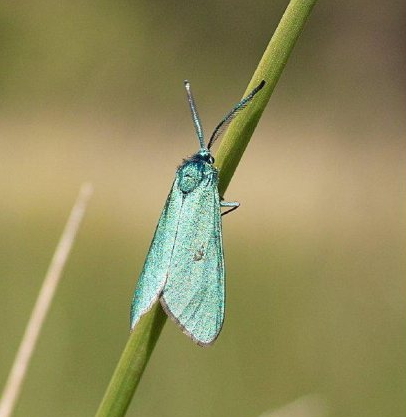
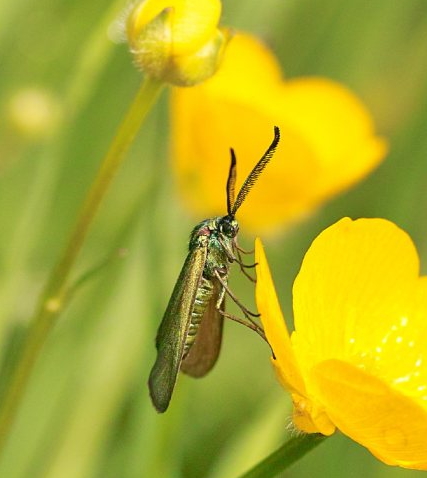
The Carmarthenshire Moth Group would like your help. They are looking for records for the day-flying Forester moth (Adscita statices). It is a Priority Species of Conservation Concern and, although there is suitable damp grassland habitat for it in Carmarthenshire, they have received few records since 2000.

m-forester-2 (2)

Forester moths (12–15 mm) fly in sunshine from mid-May to July and are often found on flowers, such as those of Devil’s-bit Scabious, Ragged Robin, clovers and others, in unimproved meadows. (The meadow below is home to the Forester moths photographed here. It hasn’t been grazed for decades, and has an annual late winter burn off of foliage, yet the moths survive).SDIM2314 (2)The larvae initially make tiny ‘mined’ tunnels in the leaves of Common Sorrel and Sheep’s Sorrel and then feed externally on lower leaves until May, when they pupate in a cocoon amongst vegetation near the ground. Emerging shortly afterwards, they are transformed into these amazingly vibrant metallic green or turquoise moths.m-forester (3)

If you do see this moth, then please get in touch through the contacts below. If possible take a photo and give the name of the site and date where it was on observed. Also, if you can, do record the grid reference (The UK Grid Reference Finder, will help you to do this – http://gridreferencefinder.com ).m-forester (2)

Please Contact: Biodiversity Officer, 01558 825390, Biodiversity@carmarthenshire.gov.uk

With thanks to I.Morgan and I.Macho for much of the text.

 A YDYCH WEDI GWELD Y GWYFYN HWN? 

________________________________________

m-forester-2 (3)

Byddai’n dda gan Grŵp Gwyfynod Sir Gaerfyrddin gael help gennych.  Rydym yn awyddus i gael cofnodion o’r coediwr (Adscita statices) sef gwyfyn sy’n hedfan yn ystod y dydd. Mae’n Rhywogaeth â Blaenoriaeth sy’n destun pryder cadwraethol ac er bod cynefin addas i’r rhywogaeth, sef glaswelltiroedd llaith, ar gael yn Sir Gaerfyrddin prin yw’r cofnodion sydd wedi dod i law ers 2000.m-forester-2 (2)

Mae coedwyr (12–15mm) yn hedfan ar ddiwrnodau heulog rhwng canol mis Mai a mis Gorffennaf ac yn fynych fe’u gwelir ar flodau megis tamaid y cythraul, carpiog y gors, meillion, ac eraill. Ar y cychwyn mae’r larfâu’n turio i mewn i ddail suran y cŵn a suran yr ŷd ac yna maent yn bwydo’n allanol ar y dail isaf tan fis Mai, pryd y maent yn troi’n chwiler mewn cocŵn ymysg llystyfiant ar y ddaear.m-forester (3)

Cofiwch gysylltu â ni os gwelwch chi’r gwyfyn hwn. Os oes modd tynnwch lun a rhoddwch enw’r safle a’r dyddiad. Os oes modd rhoddwch y cyfeirnod grid (Gall yr UK Grid Reference Finder –http://gridreferencefinder.com eich helpu i wneud hynny).

Manylion cyswllt: Y Swyddog Bioamrywiaeth, 01558 825390, Biodiversity@sirgar.gov.uk

The First Post

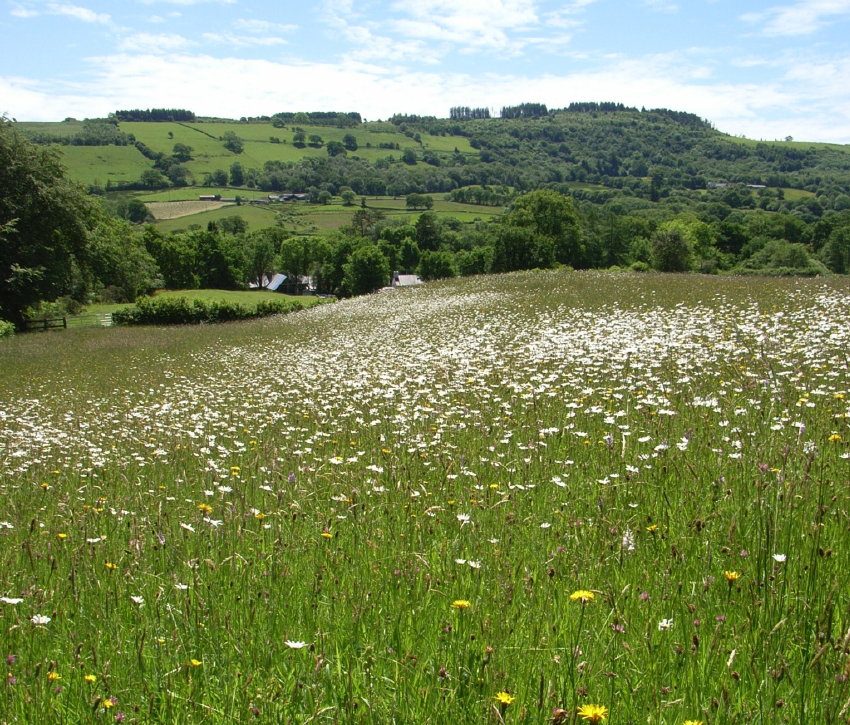
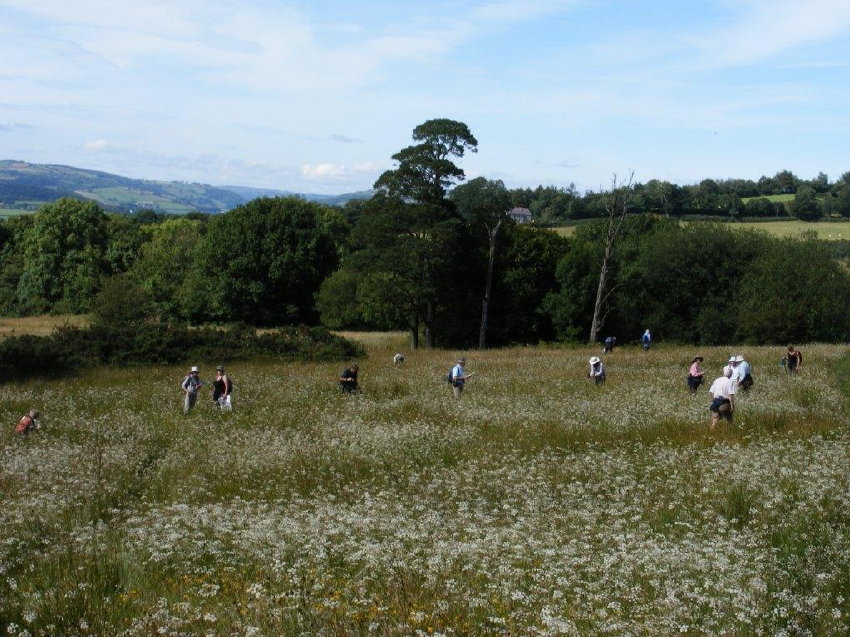
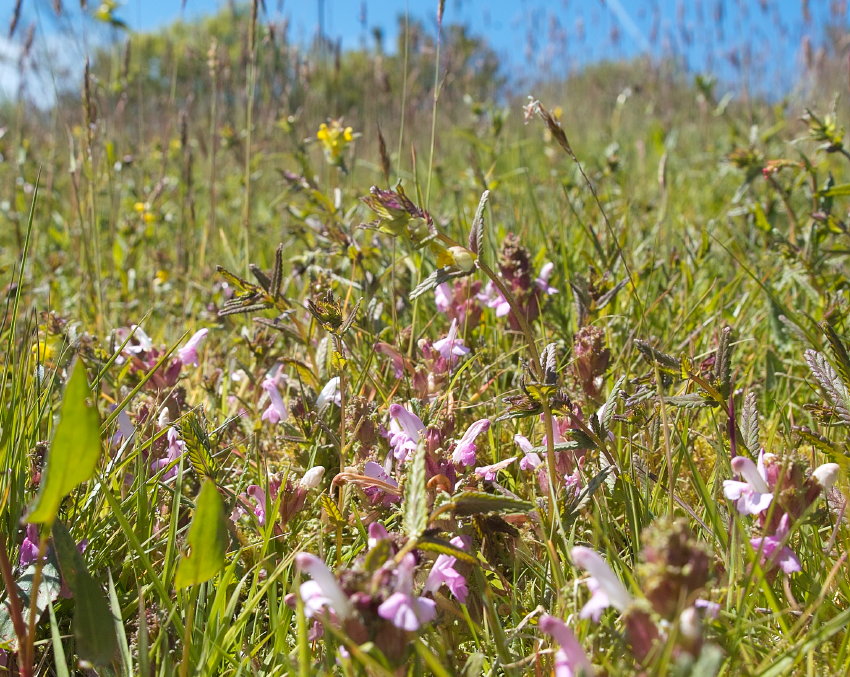
Hello and welcome to the Carmarthenshire Meadows Group website and blog. Its’ aim is to provide and share information about how to restore and manage the county’s valuable resource of wild flower meadows.

CM6 (2)

There will be occasional posts, like this one, as well as more static resource web pages, such as those you can click on beneath the website banner at the top of this page. A big thank you to Isabel Macho, Carmarthenshire’s Biodiversity Officer (who helped host the inaugural meeting for a potential Meadows Group at the NBGW this spring) for providing much of the text to get the site up and running, and any meadow owners who have sent me photos to include.Derek Cobley 3 (2)

How valuable the site becomes over time will largely depend on how many people visit it, and contribute to it. So do please post comments, or ask questions. This should be quite easy for you to do using the comments/reply boxes, or by clicking on the “Leave a reply” link at the end of the posts. And if you ‘follow’ the blog, (by clicking on the FOLLOW box to the top right of this page), then you’ll automatically get sent a link when anything new gets posted here. When you reply for the first time, it will take a short while before anything appears on the site – your comment has to be ‘moderated’. If for any reason, you comment, and nothing shows up, then do email me at the address to the top right, to let me know there is a problem. Thank You. BSBI visit to whorled caraway field in 2008 (2)

If you have any suggestions for what you would like to see on the site, or have any images to include, then again do contact me (Julian Wormald, the current site administrator) at the email address to the side, or Isabel. But please only send me resized images less than 500 KB, since we have limited satellite broadband data allowances!   SDIM2297 (2)

Finally to introduce myself, Julian Wormald. I am a retired vet and meadow/smallholding owner living in North East Carmarthenshire. I have been fascinated by the complex interactions between flowers, insects and other wildlife for many years, and see huge potential for Carmarthenshire’s diverse meadows to become wildlife bastions at a time of great threat to these environments. I volunteered for this role in spite of being a computer technophobe, though keen photographer, so please bear with the site’s early glitches, but it seemed important to try to build on the enthusiasm of the spring meeting to get something up and running prior to the next few months, which are perhaps the highpoint of our meadows’ year, before things quieten down again, later on …sdim7063-2

There are surely few pleasures to match a walk through a vibrant wild flower meadow on a sunny day, or the slow but exciting developments and changes of these complex habitats over time. I hope that we can all communicate and share with others some of this excitement, through this site. SDIM2283 (2)

Thank you for reading.

Posted 28/05/2015

_________________________________________________________________________

JOIN CARMARTHENSHIRE’S TIGER HUNT

THE CARMARTHENSHIRE MOTH GROUP WOULD LIKE YOUR HELP.

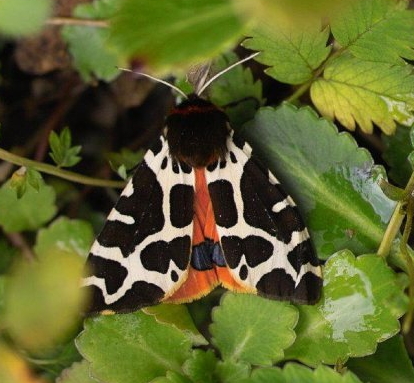
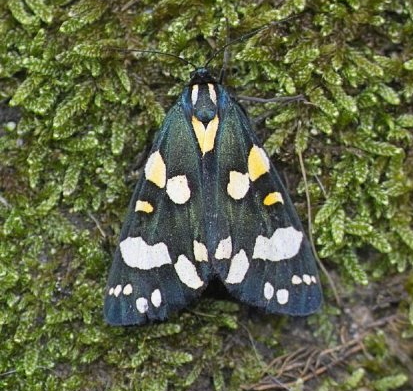
They are looking for records for the day-flying Scarlet Tiger moth (Callimorpha dominula). This distinctive, very colourful moth likes damp grassland, coastal habitats and, occasionally, gardens. It was once quite common in Carmarthenshire, but there have been few records of sightings since 2000. l-scarlet-tiger-2 (2)
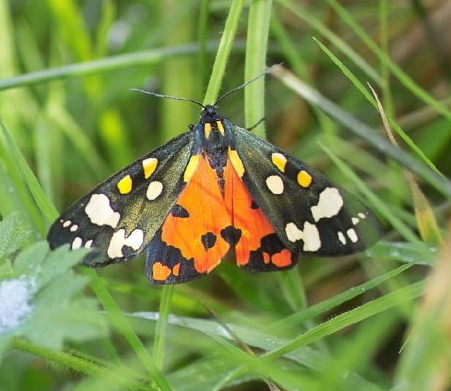
Scarlet Tiger moths (wing span 45–55 mm) fly in sunshine in June and July, particularly during late afternoon. The young caterpillars feed on species such as comfrey and hemp agrimony. When larger the caterpillars are often found feeding on nettles, brambles, willows, honeysuckle and meadowsweet.l-scarlet-tiger1 (2)

If you do see this moth then please get in touch through the contact below. If possible take a photo and give the name of the site where you saw it and the date. Also, do record the grid reference if you can (See UK Grid Reference Finder to help you do this http://gridreferencefinder.com ).

There are other tiger moths for which the moth group would like records – so keep your eyes peeled…l-garden-tiger1 (2)l-garden-tiger (2)
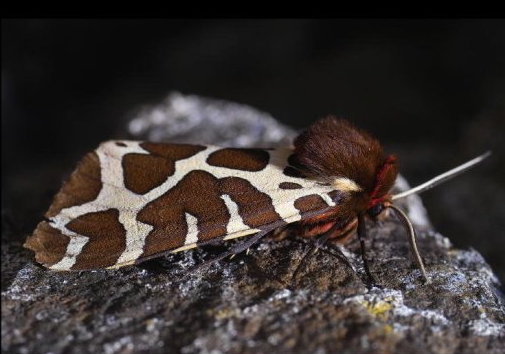
The Garden Tiger, Arctia caja, (pictures above), (50–78 mm) – flies in July and August . It’s still regularly recorded but is declining in numbers.

The Cream-spot Tiger, Arctia villica britannica, (45–60 mm) – flies in May-June. There is one old record from Kidwelly, but does it still occur in the county?

The Jersey Tiger, Euplagia quadripunctaria, (52–65 mm) – flies from mid-July-September. No records in the county as yet, but this very rare moth has now been recorded in south Wales. Look on buddleia and thistles, along the coast.m-ruby-tiger (2)m-ruby-tiger-take-off (2)
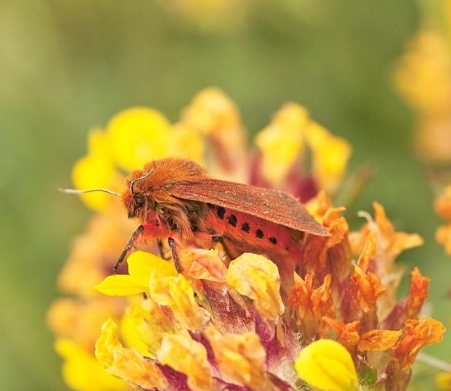
There is also a less rare Ruby Tiger, Phragmatobia fulginosa, (28-38mm) – which can have 2 generations per year, so flies in April to June, and again in July to September. (pictures above).

So why not join the ‘tiger hunt’!

With thanks to I.Morgan, for much of the text.


Please contact: Biodiversity Officer, 01558 825390, Biodiversity@carmarthenshire.gov.uk


Find out more: http://www.carmarthenshiremoths.co.uk

 ______________

HOFFAI GRŴP GWYFYNOD SIR GAERFYRDDIN GAEL CYMORTH GENNYCH!

Rydym yn awyddus i gael cofnodion o’r teigr ôl-adain goch Callimorpha dominula, sef math o wyfyn sy’n hedfan yn ystod y dydd. Glaswelltiroedd llaith, cynefinoedd arfordirol ac, yn achlysurol, gerddi yw cynefinoedd y rhywogaeth drawiadol hon. Arferai fod yn eithaf cyffredin yn Sir Gaerfyrddin ond prin yw’r cofnodion sydd wedi dod i law ers 2000.

l-scarlet-tiger-2 (2)

Mae teigrod ôl-adain coch (y mae lled eu hadenydd yn 45–55mm) yn hedfan yn yr heulwen yn ystod misoedd Mehefin a Gorffennaf, ac yn enwedig yn hwyr yn y prynhawn. Bwyd y lindys yw planhigion megis llysiau’r cwlwm a byddon chwerw. Ar ôl tyfu rhywfaint, yn fynych gwelir y lindys ar ddynent, mieri, helyg, gwyddfid ac erwain. Cofiwch gysylltu â ni os gwelwch chi’r gwyfyn hwn. Os oes modd tynnwch lun a rhoddwch enw’r safle a’r dyddiad. Os oes modd rhoddwch y cyfeirnod grid (Gall yr UK Grid Reference Finder – http://gridreferencefinder.com eich helpu i wneud hynny).l-scarlet-tiger1 (2)  Yn ogystal rydym yn awyddus i gael cofnodion o deigrod eraill – felly cadwch eich llygaid ar agor. l-garden-tiger-2 (2)

Teigr yr ardd (50–78mm) – mae’r rhywogaeth hon yn hedfan yn ystod misoedd Gorffennaf ac Awst – cofnodir y gwyfynod hyn yn rheolaidd o hyd ond mae’r niferoedd yn lleihau.

Teigr ôl-adain felen (45–60mm) – mae’r rhywogaeth hon yn hedfan yn ystod misoedd Mai a Mehefin. Mae gennym un hen gofnod o Gydweli – a yw’r rhywogaeth hon yn dal i fod yn y sir?

Teigr Dyfnaint (52–65mm) – mae’r rhywogaeth hon yn hedfan o ganol mis Gorffennaf tan fis Medi. Nid oes dim cofnodion yn y sir hyd yn hyn, ond mae’r gwyfyn prin hwn wedi ei gofnodi bellach yn Ne Cymru.

Edrychwch ar lwyni cynffon las ac ar ysgall ar hyd yr arfordir!

Felly beth am gymryd rhan yn ein ‘helfa teigrod’!

Manylion cyswllt: Swyddog Bioamrywiaeth, 01558 825390, bioamrywiaeth@sirgar.gov.uk

 I gael rhagor o wybodaeth gweler:

http://www.carmarthenshiremoths.co.uk