
Thanks to Isabel for some more information about conservation grazing opportunities with ponies from Pont:
PONT have access to at least 80 semi-feral pony mares, mainly Section A/ B types from the Gower. Obviously these can be split up into smaller groups. They are used to people, but are not halter broken, etc. (A view of an Exmoor pony grazed meadow, below – apologies, I don’t have a note of who sent me this photo).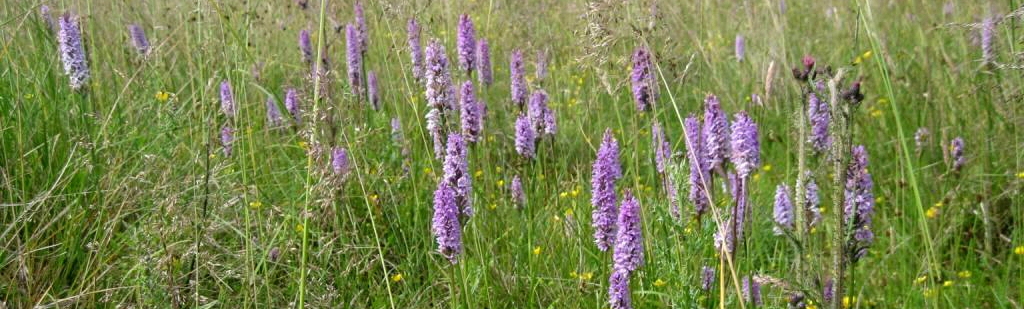
However they are perfectly suited to conservation grazing. Ownership of these ponies can be transferred, or they can be loaned by the current owner for conservation grazing purposes. It would work best if a system could be set up where they can be moved between sites to deliver best results for the habitats, or on a very large site which can tolerate low levels of grazing all year.
PONT is very happy to advise if anyone is interested.
For more information, please contact:
Emma Douglas – PONT Regional Development Officer – South Wales, emma.douglas@pontcymru.org or tel: 07579008578.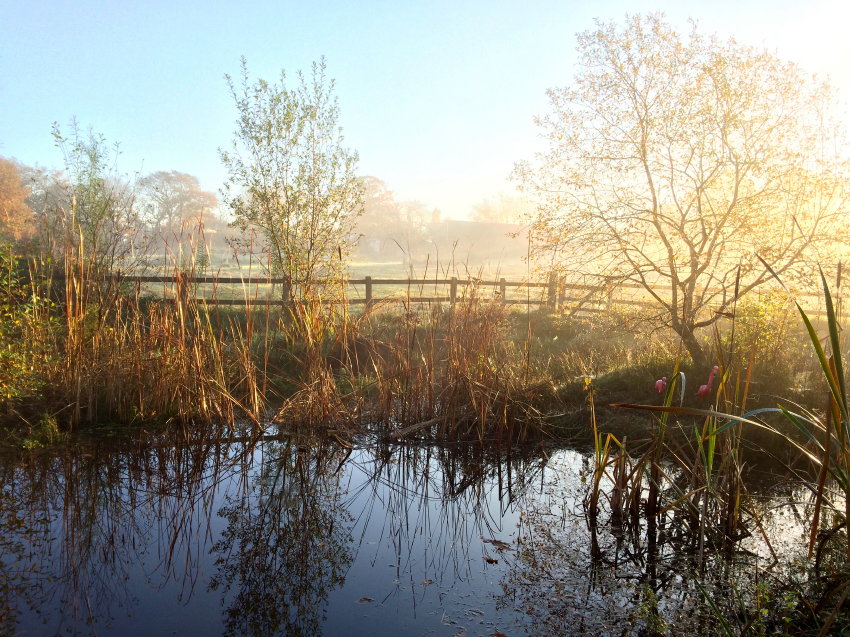
(Thanks to Gwilym Roberts for the above photo of his meadows and pond).
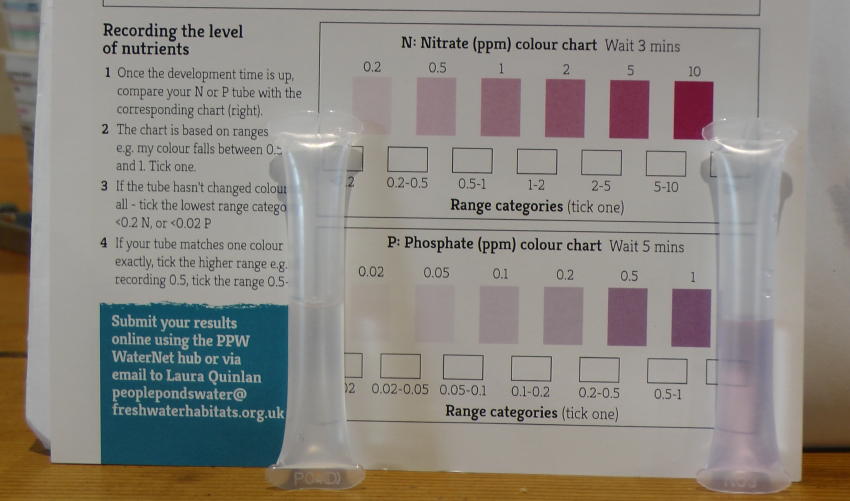
Earlier this month, I received the testing kits from Laura Quinlan at The Freshwater Habitats Trust, for monitoring water quality in respect of nitrates and phosphates.
I can confirm that they’re really easy to use, and equally pleasing was that both our 2 ponds, sitting as they do in a valley bottom with a couple of miles of mountainside above them, together with our upland stream registered very low levels of both phosphates and nitrates.  The frogs and toads clearly knew this anyway, but it’s nice to quantify just how ‘clean’ and supportive for wildlife any particular water body is.
  I’ll plan to repeat the sampling later in the year, but it’s not too late to get in touch with Laura if you’d like to monitor any local water habitats that you know about.
For more information please contact Laura Quinlan : LQuinlan@freshwaterhabitats.org.uk
Finally, I thought its a good time to make another suggestion for a bit of reader participation…
Our meadows are just starting to emerge from a very long wet, but mild winter – the wettest we have known. The Meadows Group hadn’t even met for the first time a year ago, and this website was a little way off getting started. Our meadows are looking typically uninteresting at the moment – a mass of olive green moss, old dry grass stems, and just the hint of a few fresh new blades of grass… But they’ll soon begin to explode into colour. Looking closely the last week, I found the first celandines, and dandelion flowers. So our native meadow flora and fauna is quite late off the mark, compared with some of our woodland and hedgerow flowers, and more particularly flora from continental Europe which has masses of early season flowering plants. In part because much of our flora was lost during the last Ice Age.
But it would be great if readers could send me images of flora and fauna that they spot in local meadows, from now on, through the year, so that we can set up a separate page highlighting how the county’s meadows change through the year. Flowers, insects, animals, birds, fungi …it will all give us an idea of what’s happening when and where.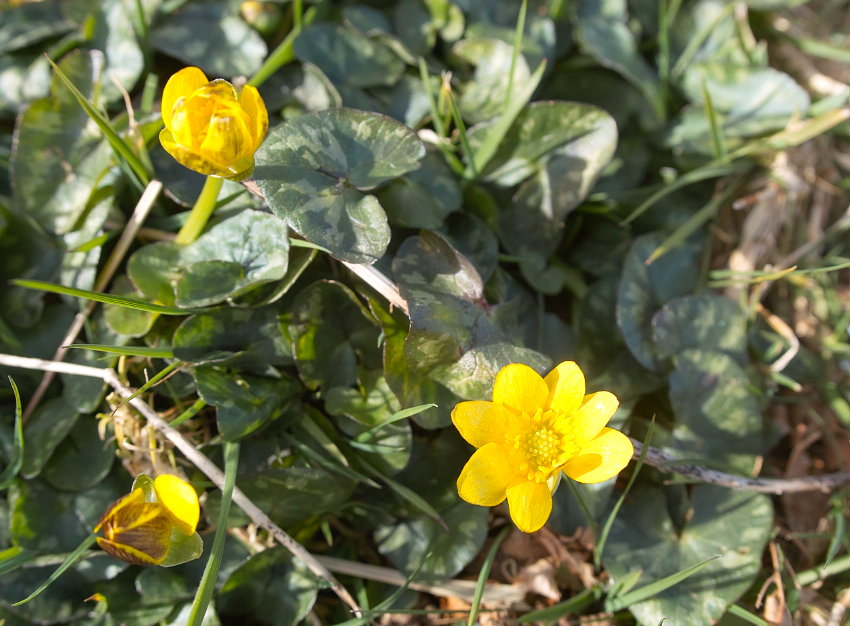
As always, if you can resize an image before sending it, it would be very helpful to me, and email it, with a note of when and where it was taken, to Julian Wormald : grumpyhobbit@gmail.com. I shall try to add some of my own photos as well, but I really do need some input from other ‘meadowers’ for this to be a useful exercise, so do have a look, and as I always have to remind myself…carry a camera with you, or you’ll miss that fleeting shot.
Thanks for reading.
 Carmarthenshire Meadows Group - Grŵp Dolydd Sir Gaerfyrddin
Even though I am not in your group area, this is a really interesting post and great idea to monitor both your water and flora.
LikeLike
Thanks Julie – I hope that I get some more pics on what’s flowering in other meadows. As for water quality…yesterday there was a tractor caught fire on the country road on the other side of the valley half a mile up the valley. The fire brigade came and went, and then on our evening walk we could smell diesel along our stream. Looking down, there were significant surface films of diesel, particularly lingering in eddy pools. I’m sure it will quickly pass through…but it presumably came from water run off from the road, which quickly ended up in the ditches and then stream…an indication of how sensitive any environment is to man made pollution incidents,
Julian
LikeLiked by 1 person
Another very interesting post. What a grand idea to ask for photos from other meadow ‘owners’ – it will be fascinating to see the results. Can a small field with a pond in the middle that has sheep grazing on it sometimes through the year be classed as a meadow or is it just a field? Trust me to ask a ‘silly’ question!!
LikeLike
Hello Llety,
Not a silly question at all. The very impressive Monmouthshire Meadows group has over 200 “meadows” which have been florally surveyed, ranging from classic wild flower hay meadow, to small front lawns managed sympathetically for wild flowers. So far as the CMG is concerned, it’s this management for wild flowers and other diversity, that is the key defining feature. We also use sheep as part time grazers as part of our management system to nudge the pasture in the direction we want.
So do feel free to send me some pics from your field of anything of interest, and even consider filling out part or all of the questionnaire, and get your field up on the site on the Gallery Page…. Check out the others already showing in the Gallery to see the range of what is so far listed,
best wishes
Julian
LikeLiked by 1 person
Thanks for the reply Julian. I might just check out the others on the Gallery and see what’s there. If the sheep leave anything of interest on the field behind I’ll let you know! Best wishes Marianne
LikeLike