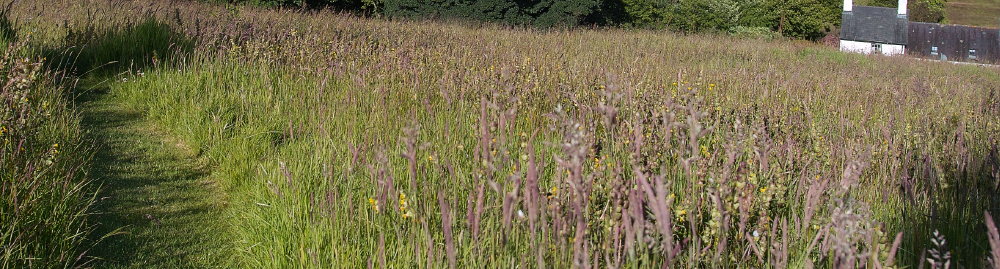
After a very wet mild winter, and later start to spring, at last our upland meadows seem to be growing well. I’ve been kindly sent a link to a hay making camp in Transylvania, by Gwyn Jones of European Forum on Nature Conservation and Pastoralism .
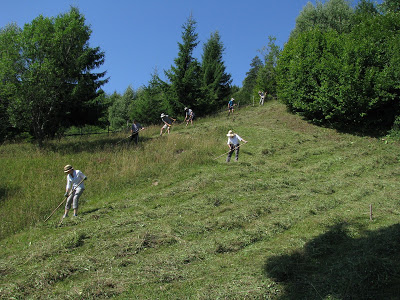
 Click here for more details on what looks like a brilliant week learning about how biodiversity goes hand in hand with traditional meadow management in this part of Romania.
  The course runs from 7th to 14th August, and is very reasonably priced at £30 per person per day, including all meals and accommodation.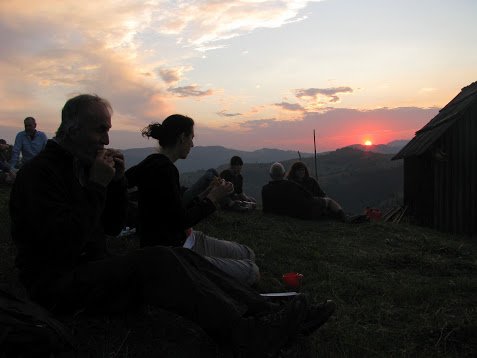
Secondly, I’ve also been sent the latest summer newsletter of the Carmarthenshire Moth and Butterfly Group, which includes much detail on the latest moths found around and about the county. Many thanks to Richard Smith and Ian Morgan for this. Click here to access it. In particular there is a review article by George Tordoff of Butterfly Conservation, on the current status of the Marsh Fritillary butterfly.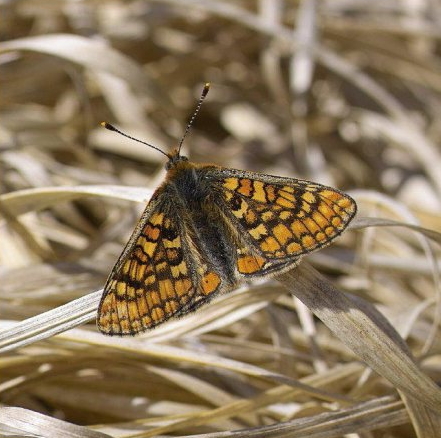
This beautiful, but still quite rare butterfly relies on appropriately managed wet meadows containing Devilsbit Scabious plants as a larval food source, and Carmarthenshire is still a sanctuary for it. We’ve fast approached the time of the year when the adults may be seen flying, or resting on vegetation in warm sunshine, so do look out for them in suitable habitats, and if you spot any, then let the other CMG know.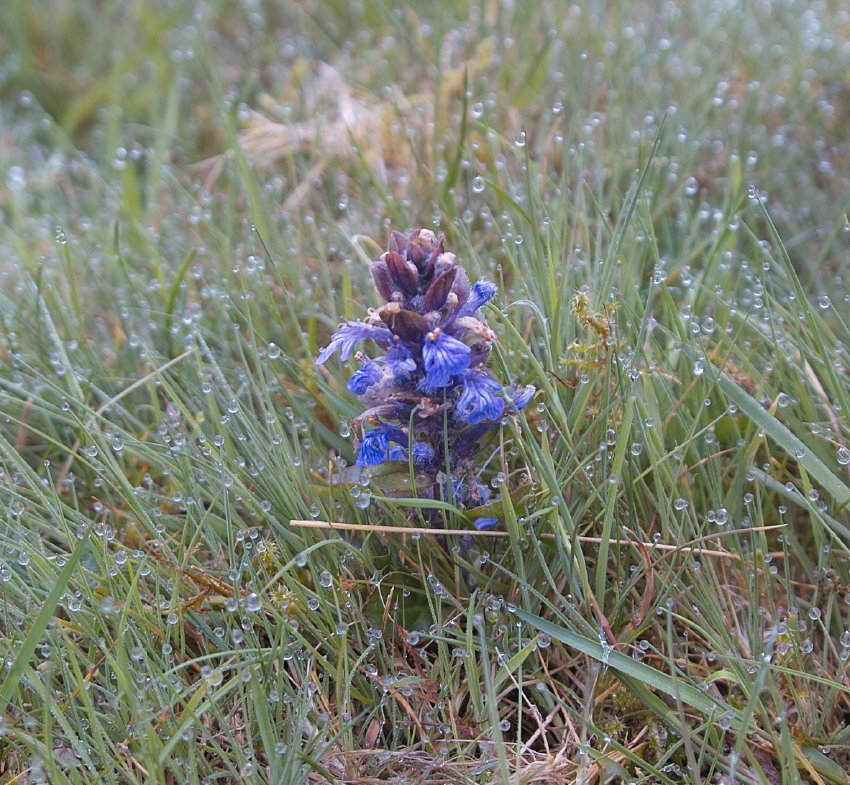
4 years ago when we first introduced some yellow rattle seed to our top (hay) meadow, I was really excited when the first flowers appeared. For the next 2 years I collected seed from the earliest flowering plants and scattered this around. I figured that a population of early flowering forms would sustain it within the meadow even if we took part of the hay crop off early, if weather conditions became suitable. Last year, I didn’t bother collecting or scattering any seed, since there was clearly enough falling from our manual hay making for it to be beginning to appear in most areas of the field.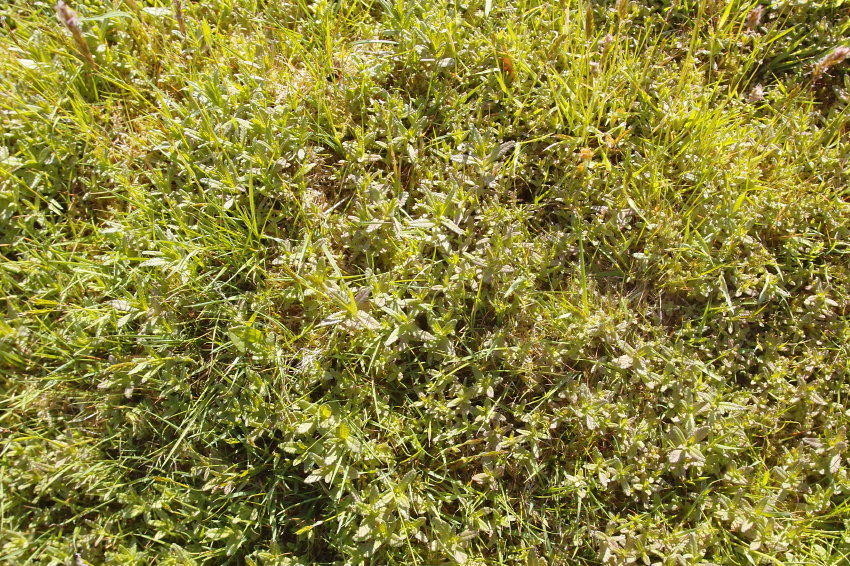
This year, the first flowers have already opened and there are now huge variations in how the sward is looking. Some areas have incredibly dense yellow rattle germination, with little grass growth. It is after all hemi-parasitic. The hay crop will definitely be reduced, and since this is partly what we want, since a lighter crop is easier to dry and manage, I don’t have a problem with this. But what interests me more is how this process pans out in future years. There is a slight sense of unease.
What if I’m creating a yellow rattle monopoly?
In fact, my experience of viewing several long established hay meadows, and indeed areas of our garden where we are trying to employ mixed perennial planting schemes incorporating as wide a range of, preferably self seeding, plants within a small area, encourages me that this won’t happen. After a few years, any dominant plant like the yellow rattle will hopefully begin to subside, and other plants will appear to create the sort of moving tapestry typical of a shifting, but semi-stable plant community.
Is anyone else going down the yellow rattle route to increasing floral diversity in a hay meadow finding a similar explosion in it’s numbers in the early years a worry?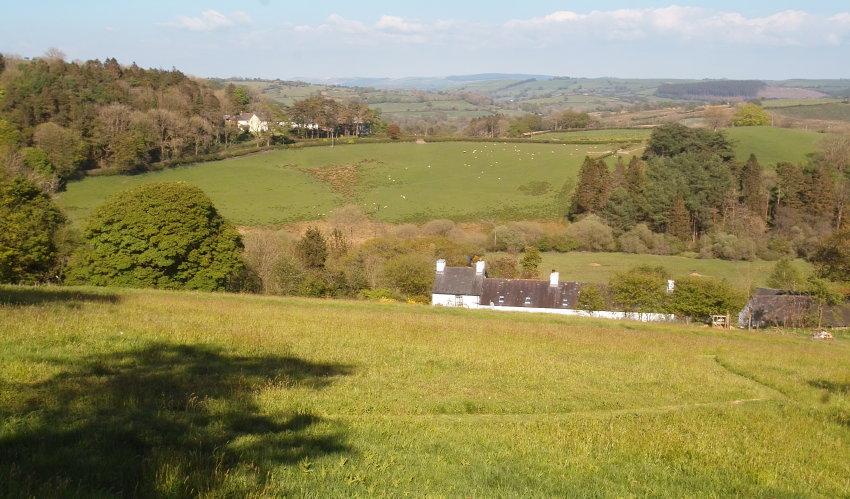
Finally if any readers are interested, we’re holding a meadow and garden open day at our small holding, Gelli Uchaf, (above) on National Meadows Day, Saturday July 2nd this year. Perhaps the Burnet moths will be flying?  Because of parking limitations we are having 2 slots. The first at 10.30 am, and a second one at 2.30 pm. Our garden, which also opens in the spring for charity under the National Gardens Scheme (NGS), is also going to be included in the visit, and there is a £4 per person admission charge for this event, which includes looking at both the gardens and the meadows. Several of which are being restored from monoculture Soft Rush – a work in progress, but interesting to compare how we’re getting on with neighbouring fields which are being managed more conventionally. The admission money goes to the half dozen charities which the NGS supports. There will also be cakes and teas available, if pre ordered. (£3 pp)
But please note that an entry ticket and an order for tea/cakes must to be booked with us in advance. There is also no minimum group size for this open day.
To find out more about us, please click here for more details on visiting the garden, and contact details.
Anyone else who is planning a meadows event for 2016, then do please get in touch if you’d like me to put details on the website.
Thanks for reading.
 Carmarthenshire Meadows Group - Grŵp Dolydd Sir Gaerfyrddin
Pingback: October Meeting and Future Development of the Meadows Group | Carmarthenshire Meadows Group – Grŵp Dolydd Sir Gaerfyrddin