
How are your favourite meadows looking now? 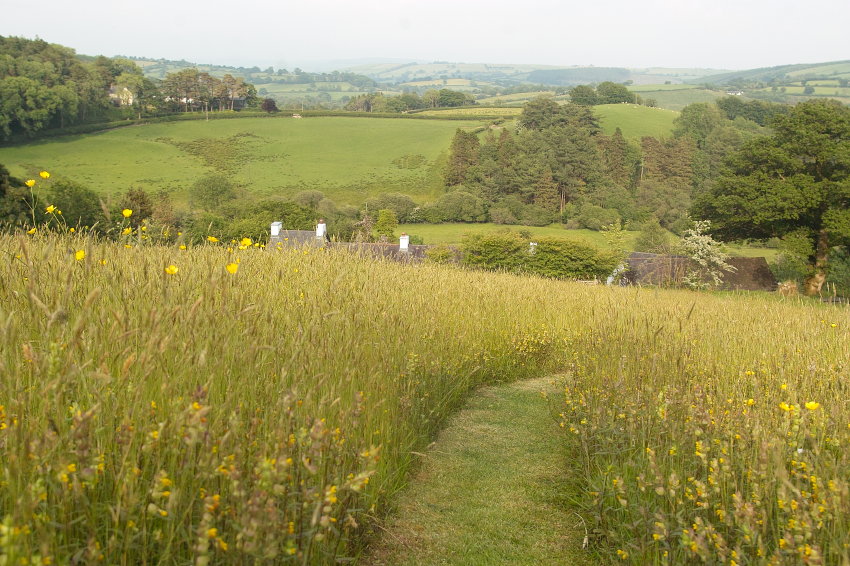 It seems that over the last fortnight, our meadows are changing almost daily, both in terms of height of growth, what’s flowering, and also even the first hints of increased insect meadow activity, beyond the ever present bumblebees…
In our upper hay meadow, the sweet vernal grass has already formed tall seed heads – the dominant early flowering grass species in this field, whilst other later flowering grasses are now beginning to add greens, pinks and whites to the scene.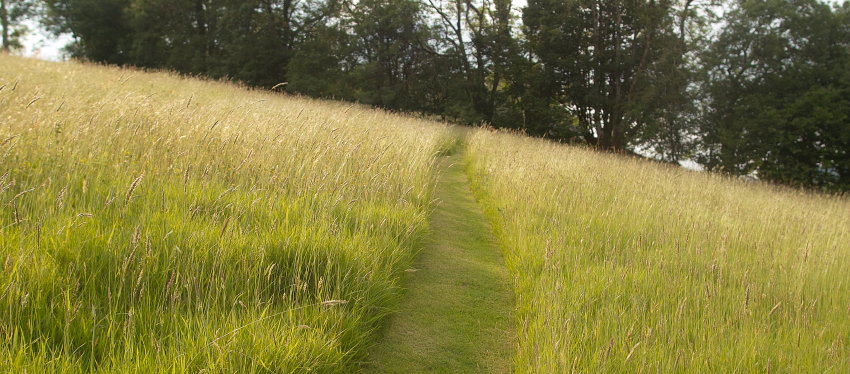
The fairly extensive yellow rattle is giving a yellowy tinge to this green grassy backdrop, whilst there’s no question that in areas where it’s densest, the height of individual yellow rattle plants, and flower size and number are dramatically reduced from those plants growing in areas of the leafier sward where they haven’t germinated before.
The last week has also seen the fabulous red russet colours of Sorrel flower and seed heads topping the scene – best appreciated in slanting light as the sun dips.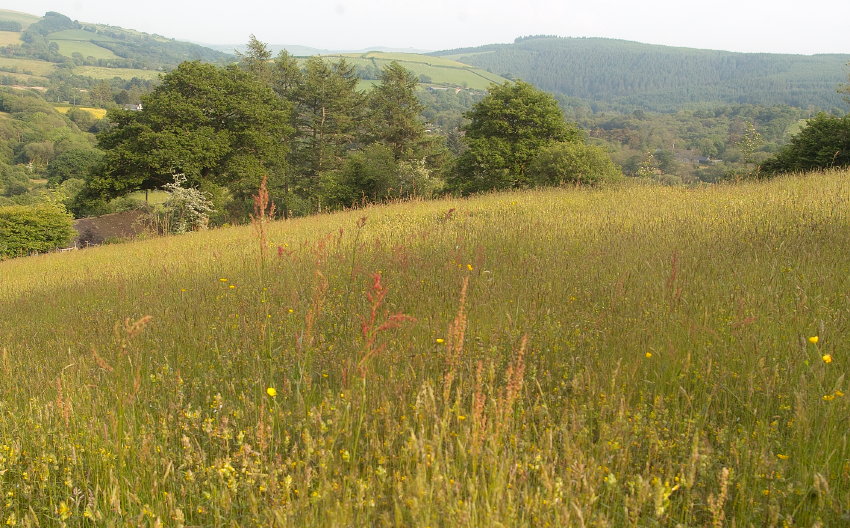 A few meadow buttercups also emerge above the sweet vernal haze at this higher level.
Our lower wet meadows have a quite different feel and appearance in part because of the wetter conditions, but also because they are still being grazed at a very low intensity. This reflects the dilemma of any landowner. Grazing is a key part of the management mix. In an ideal world they would just be grazed over the winter months, and allowed to grow unhindered through the summer. But you then have the issue of removing and using a vast amount of grass material, dried in some way, off fields that are usually too wet for conventional machinery.
So our experimental approach is to graze at low intensity with just a few sheep. Most folk have told us that sheep are selective grazers, and will take out any wildflowers, in preference to anything else. Much to our delight, this doesn’t seem to be entirely accurate, and so for the first time in the 3 years since these wet fields have been moved from soft rush mono-culture, to much more diverse mixed flower grass pasture, significant numbers of flowers are growing – as yet intact. Whether we can get them to the seed dropping stage remains to be seen…
So ragged robin, some form of Forget-me-not, heath bedstraw… tormentil, cinquefoil have all appeared in quite large flowering numbers …
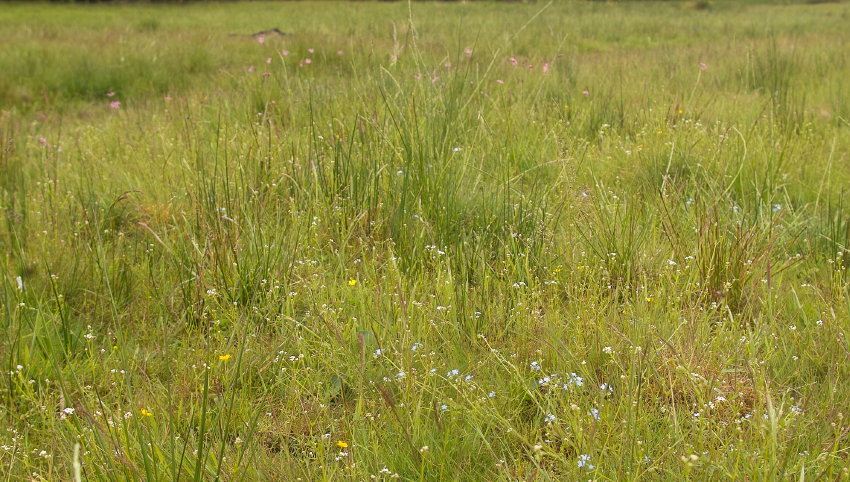 And now a huge range of grass seed heads are also creating a very different visual effect to the upper sloping meadow.
But all of our efforts are very early stage “meadow” restoration, compared with the more mature examples below…
We re-walked the circular meadow walk at Cwmdu on June 12th, and were fortunate enough to meet the owner of 2 of the meadows, as we returned towards the village. 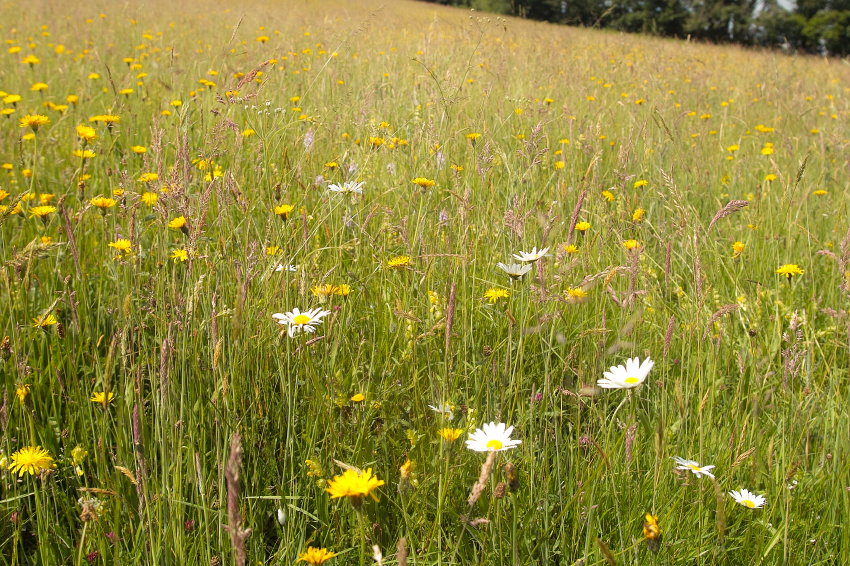 Asking her about the history of them, she said that they haven’t been ploughed for decades, and she and her husband have been managing them for floral diversity for 19 years – prompted by noticing a few yellow rattle flowers amongst the grass when they first moved to the property.
 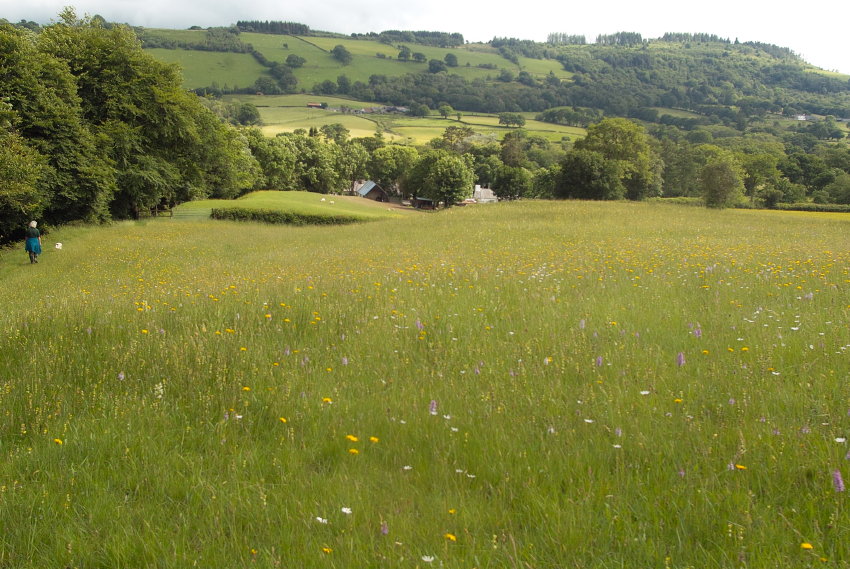 So a late cut of hay in July/August, no fertiliser and aftermath sheep grazing.
What do these fields look like now? Views above, and below…
Spectacular – there must be thousands of orchids this year – spotted and butterfly, cat’s ears, red clover, with some ox eye daisies, and an eye bright understorey to name the most obvious flowers, all amongst a thin, shortish grassy sward.
The flowers are even better than when I visited last year, so if anyone can get up there in the next 2 or 3 weeks, I’m sure they’ll be richly rewarded with a stunning visual spectacle.
The earlier meadows on this walk were equally lovely, though wetter with taller grass and rush growth. So a different feel, still with many orchids, but in addition many clumps of ragged robin, and much understorey bird’s foot trefoil. For this reason, and on a warm day, the scene was enlivened with more five-spot burnet moths than I’ve ever seen before in one place.
  Fantastic plashes of red, black and rich metallic blue…
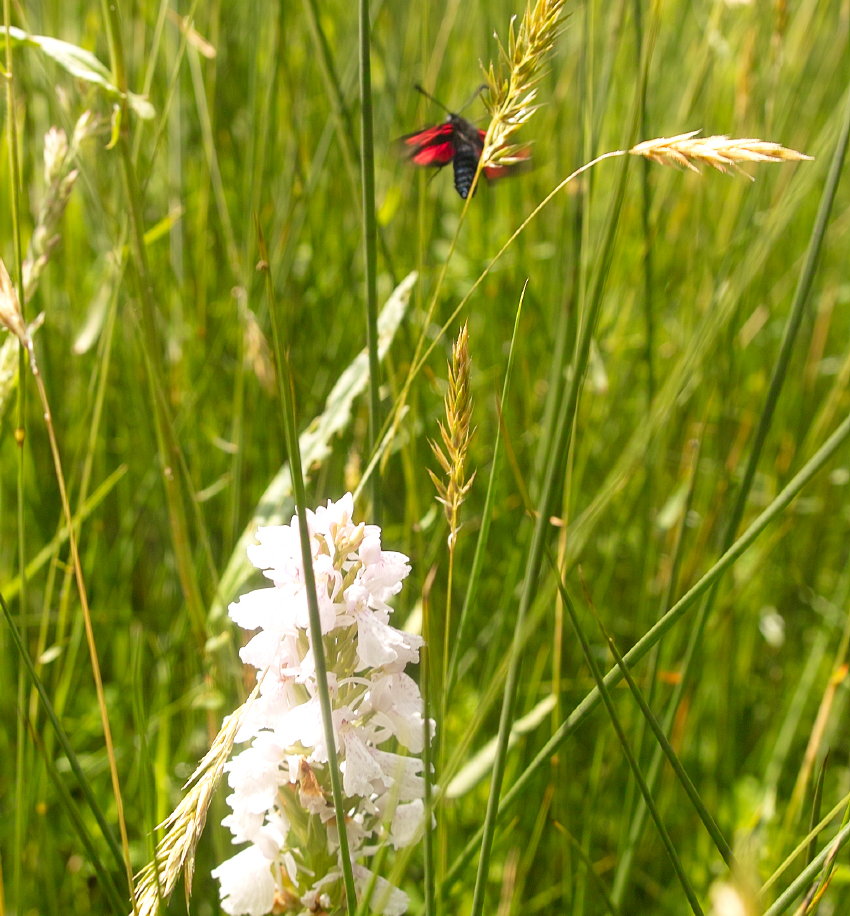 … and unlike many Lepidoptera, these moths are really quite slow flyers, and fairly easy to get close to…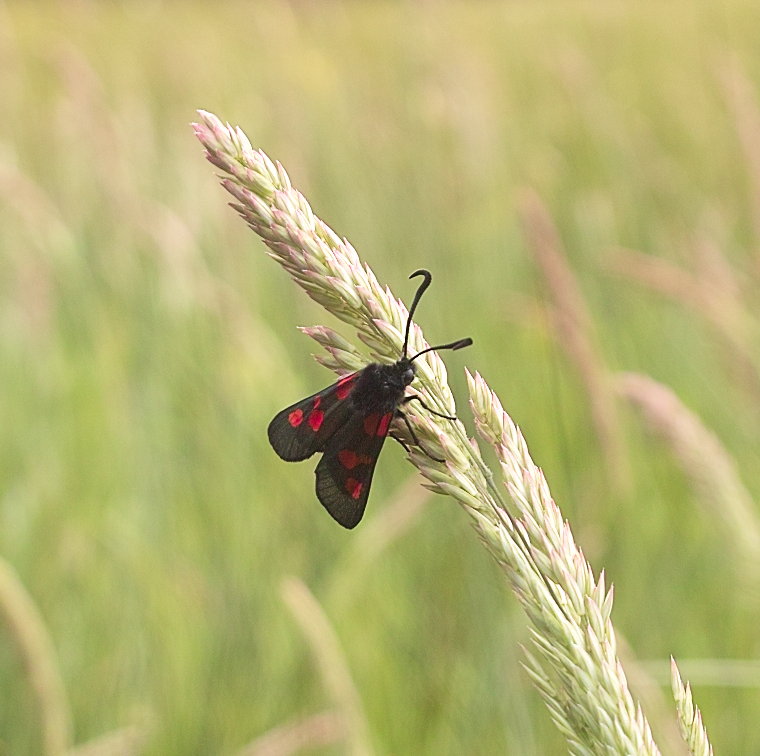
 In several example, the 5 red spots were merged into more of a generalised red blotch pattern, and on one big clump of ragged robin there were at least 8 moths feeding simultaneously. Fabulous!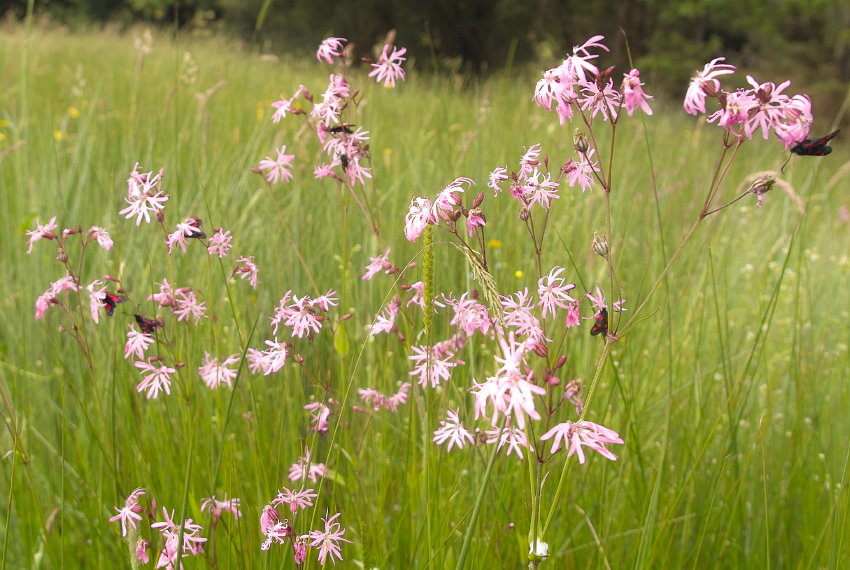
Click here for a link to how to find the public footpath walk through these fabulous fields.
But what delights are you experiencing in Carmarthenshire’s Meadows this summer? Do let me know. Comment in the box below, or email me on … grumpyhobbit@gmail.com.
 Carmarthenshire Meadows Group - Grŵp Dolydd Sir Gaerfyrddin
Hi Julian, very much looking forward to seeing these beautiful meadows in person, just followed and bookmarked your link too, I haven’t quite got the geography yet but will map this out. Did you sow Yellow Rattle in your meadows or has that appeared naturally?
LikeLike
Hello Julie, do let me know if the map works. I tried it last night and the critical 2 pages of the pdf didn’t seem to download properly, but it’s fairly easy to find from the village pub/shop, if you ask anyone. The yellow rattle in our top meadow all came after collecting a few seed heads locally about 4 years ago. I scattered them on one section of a garden bank in year one, then saved the seed from these and scattered this into the meadow the following autumn. It’s now colonised the whole of our top meadow and I’ve just introduced it, and have it flowering, in the bottom meadows too.
Best wishes
Julian
LikeLiked by 1 person
Hi Julian, the map loads fine, with 4 pages showing clearly. I have some Yellow Rattle seed here but still dithering about where to sow it. Hoping for some inspiration when we visit!
LikeLike
Thanks Julie,
I’ve provisionally booked a couple of space for you for the pm slot on National Meadows day at 2.30 pm. Hope this is OK? Our meadow came alive with Lepidopteran emergence yesterday, so let’s hope for a bit of dry weather on 2nd.
best wishes
Julian
LikeLike
Thank you for the link. It worked after a number of tries downloading it! Great post and very informative and interesting. Is there a ‘list’ anywhere of photos plus plant description of all these wonderful flowers found in the meadows. I like to know what I’m looking at. I have a number of wild flower books but the photos are never too clear for identification- we need you to do a ‘best 10 flowers ‘ in my meadow list with your fantastic photos! Just a thought when you have a spare moment!!
LikeLike
Thanks for the comment Marianne. It does make me think that an identification guide would indeed be helpful. But I really need others to help me with this a little – firstly since I’m not an expert on wild flower identification, and secondly, I’m a bit limited to what we might see, either here in our meadows, or on other meadow visits.
But like all things, maybe starting small, it might eventually grow into a more useful database? There is a really good on line website set up and maintained by R.W.Darlington, on all British wildflowers, not just those found in meadows, which I’ve found very helpful in the past. It also contains a wealth of fascinating discussion on all things related to plants in the UK.
Look here:
http://wildflowerfinder.org.uk/
Best wishes
Julian
LikeLike
Thank you Julian for the link. It’s extremely useful and easy to navigate- I’ve just spent an hour enjoying looking through it and had to stop myself looking as a whole day would have passed otherwise! I still think that a ‘localised’ meadow database would be useful and as you say ‘from small beginnings come great things’! Thank again for the website link.
LikeLike
Thanks for the feedback on the wild flower site, Marianne. I think it’s brilliant too, and an amazing effort for one man to set this up and maintain it!
Best wishes
Julian
LikeLike