It’s maybe a bit late in the year to write about manual scything, but I’d been doing a bit of research about how to make a hay rick, as an option for removing cut grass from our wet meadows in this year of luxuriant grass growth, and happened upon a website called Scythe Connection.
This is the work of Peter Vido, a Slovakian who resettled in Canada, and has done much to publicise the use of Austrian Scythes outside central Europe. Click here for his website, which contains a wealth of interesting discussion about the benefits of different forms of grass cutting, as well as scything techniques. It’s worth a read, even if you don’t fancy ever picking up a scythe, but made me realise that manual cutting and removal of material from our lower wet meadows was probably, along with drainage, what brought them into productive use, and prevented soft rush dominance decades ago.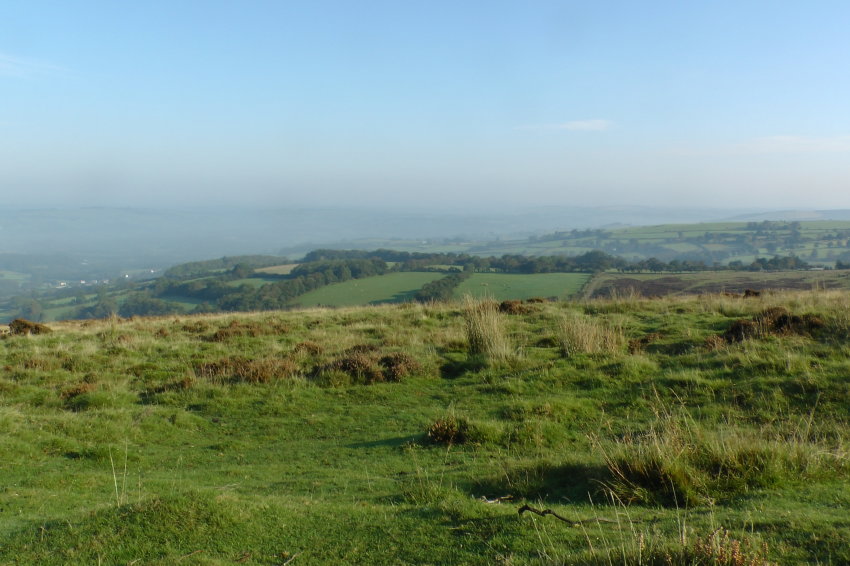
Following a link on this website took me to a scything guru’s site in Dorset from which a further link led me to the Scythe Cymru site, just in time to see that the last course on manual scything for 2016 was due to take place the following week at the Dyfed Permaculture Trust just outside Drefach Velindre – in Carmarthenshire. So I signed up, and on the hottest, sunny day in mid September headed off to meet Philip Batten and his partner Michelle, who organise the courses. Click here for Scythe Cymru.
Philip learned manual scything from Peter Vido himself, and has been honing methods for years, and is a brilliant communicator. The intensive day course covered all the basics including the wonderful scythe terminology (snathe, hafting angles, heel, toes, belly, swathe, etc)..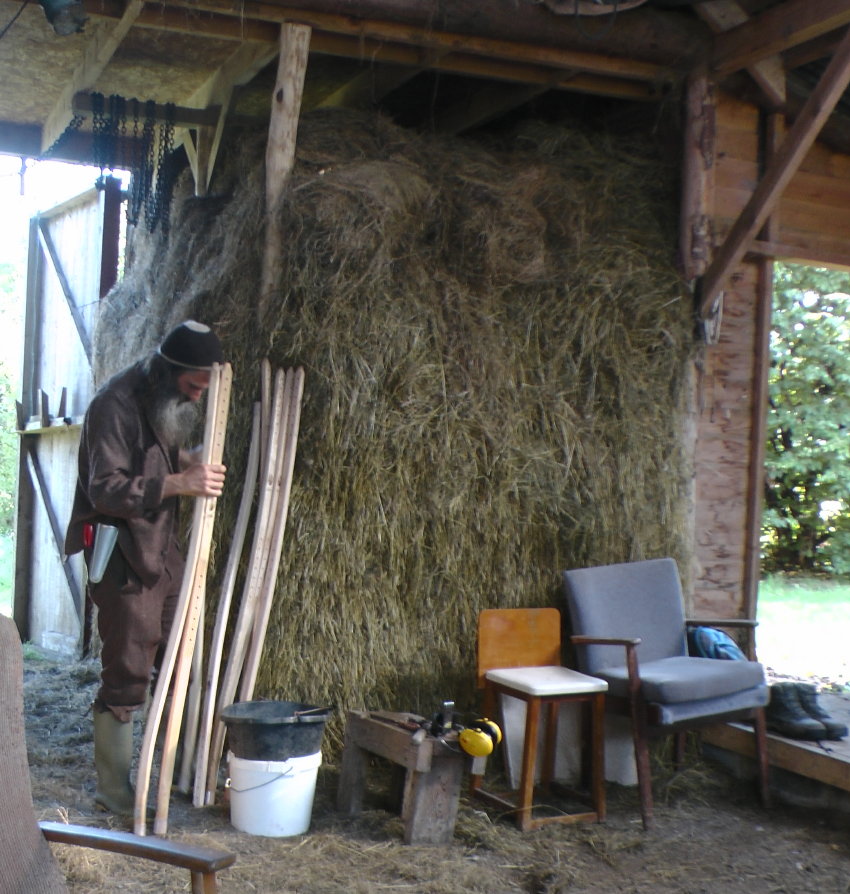
… setting up the scythe to suit different people’s size (a key advantage of Austrian scythes, over the heavier English scythes)…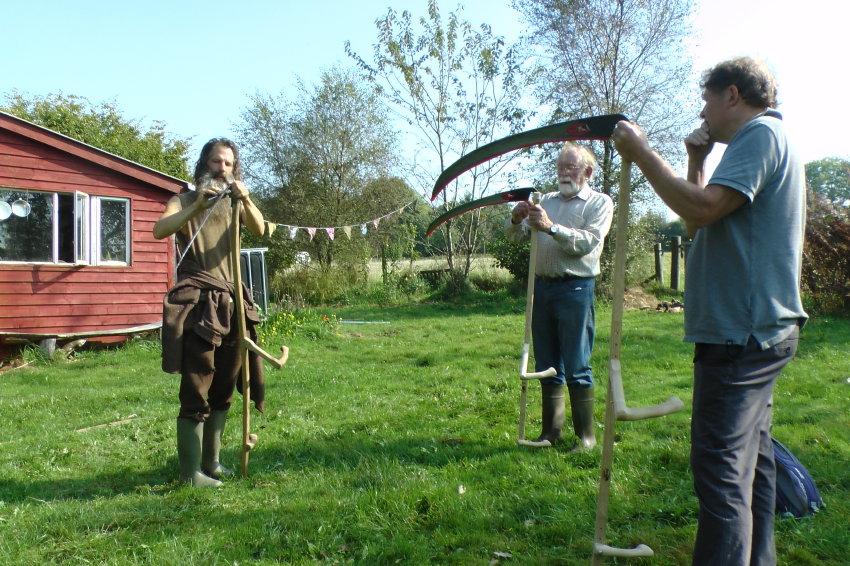
… blade selection and position adjustments, and their impact on the swathe cut…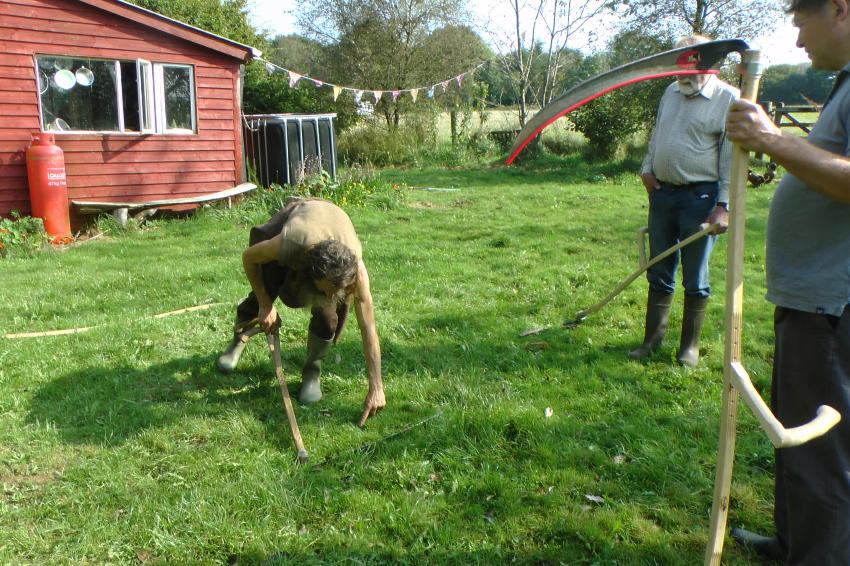
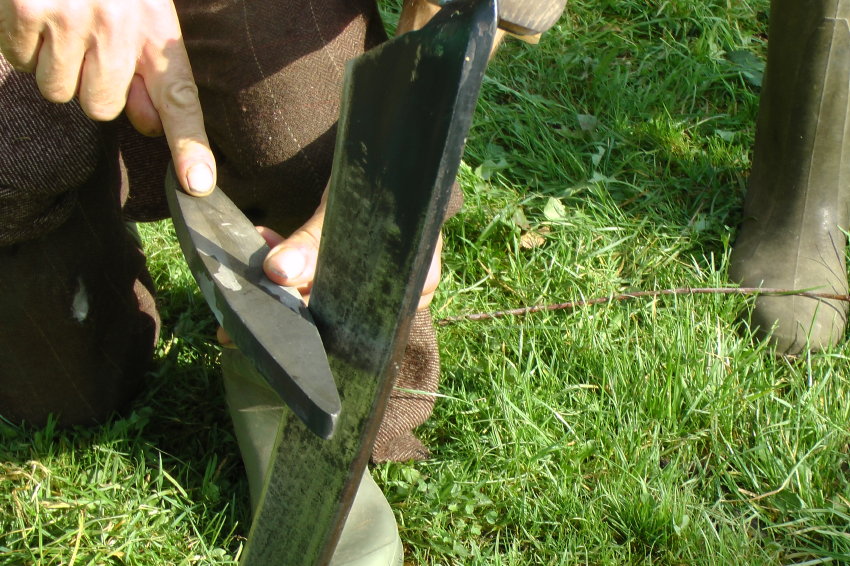
… blade sharpening and use of a wet whetstone every few minutes in the field…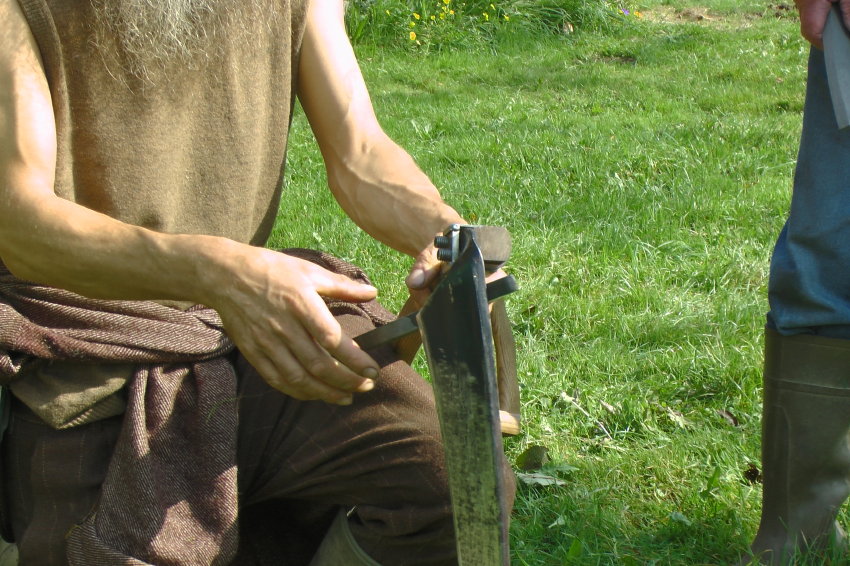
… scythe safety when in use and carrying…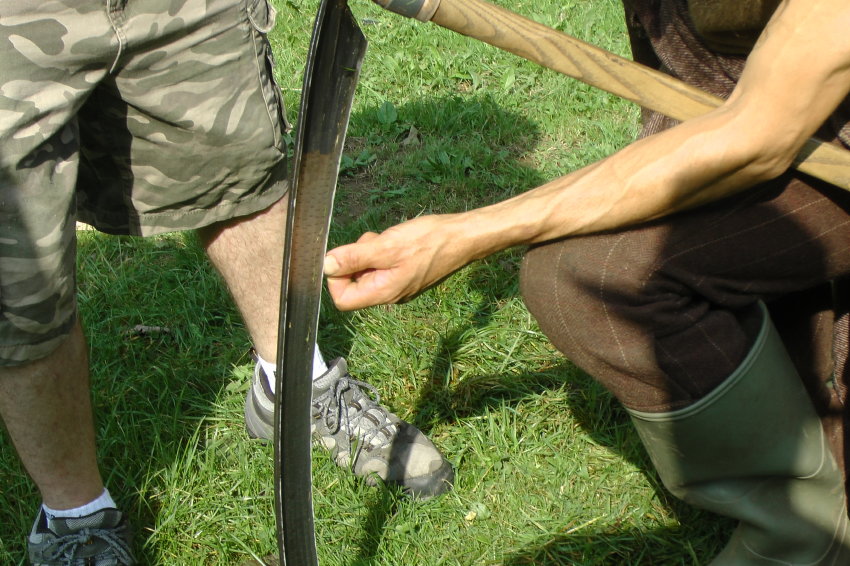 … mastering the basic body movements involved …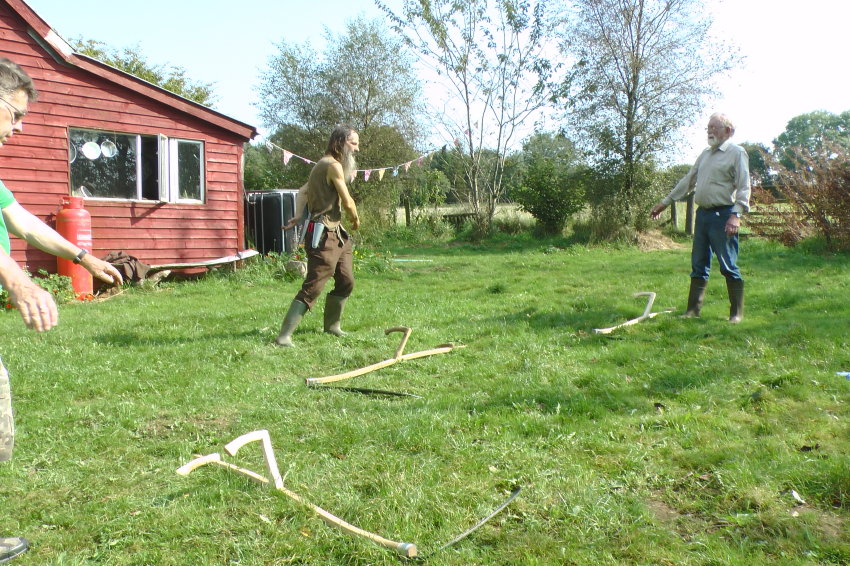
… actual cutting in the meadow… It was hugely satisfying to be able to cut a swathe of very thick meadow grasses and flowers with such a sharp blade, and so close to the ground, leaving a huge windrow to one side, even as complete beginners. There is a maximum number of 6 per course, so plenty of individual attention…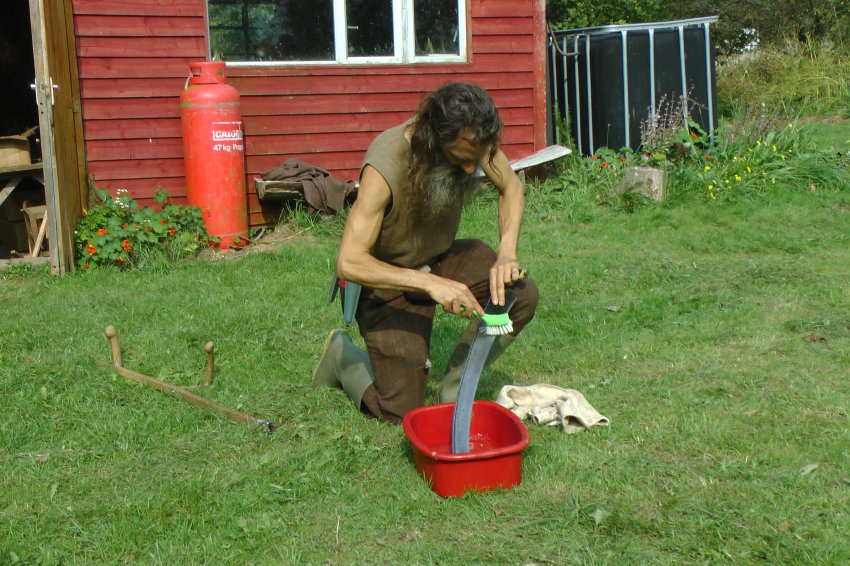
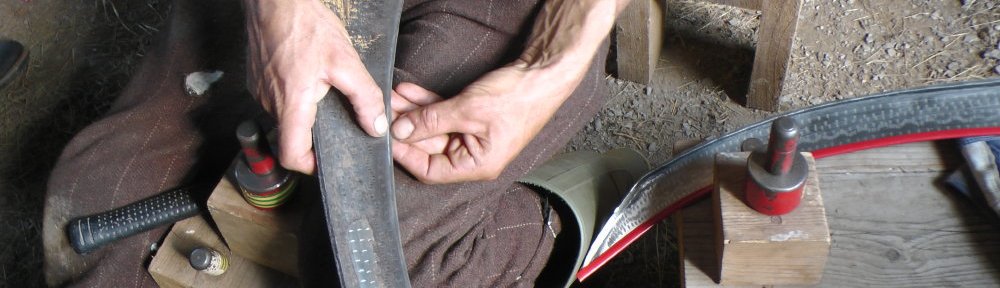
Finally cleaning the blade after use, correct storage and the vital technique of peening – hand controlled metal bashing, required every few hours as the blade is worn down by regular sharpening into a blunter profile…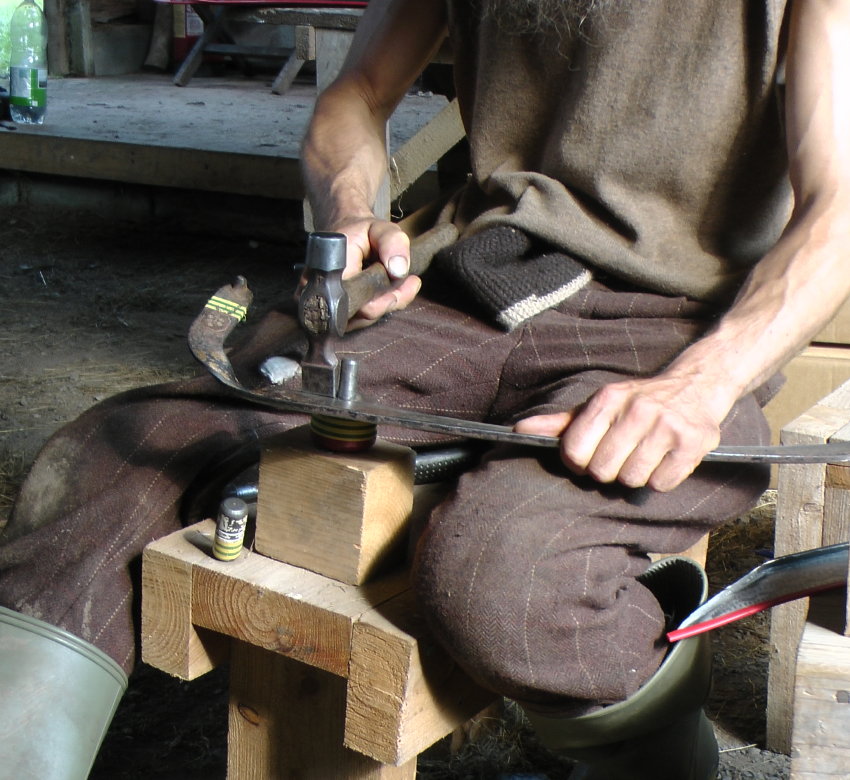 Peening creates a thinner band of steel near the blade’s edge which can be then be sharpened again with the stones.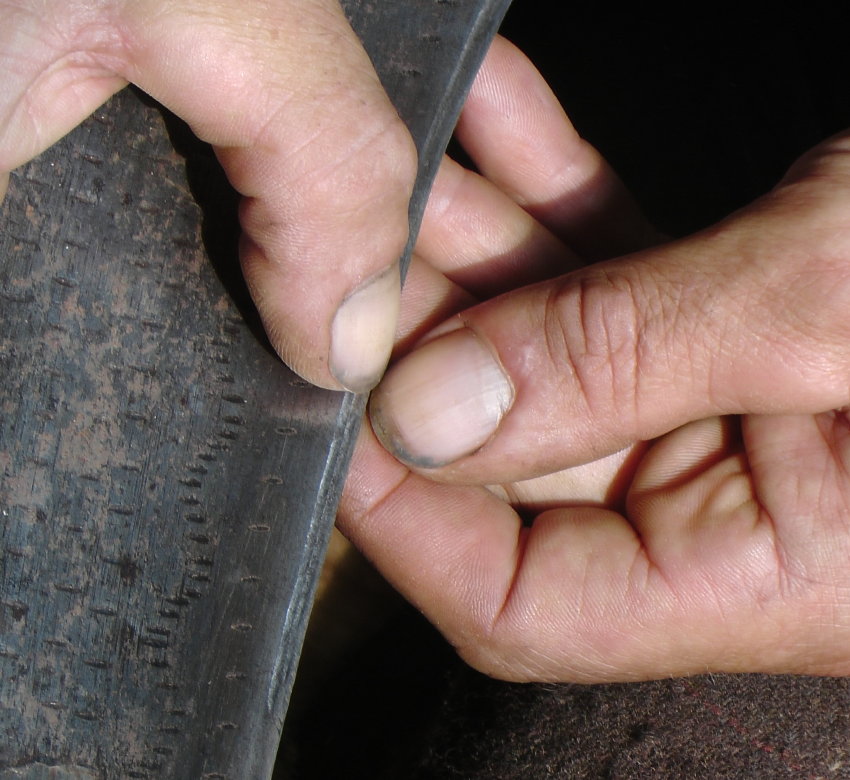
Philip explained that many central Europeans still know how to peen freehand, onto a narrow anvil – quite a skill to acquire …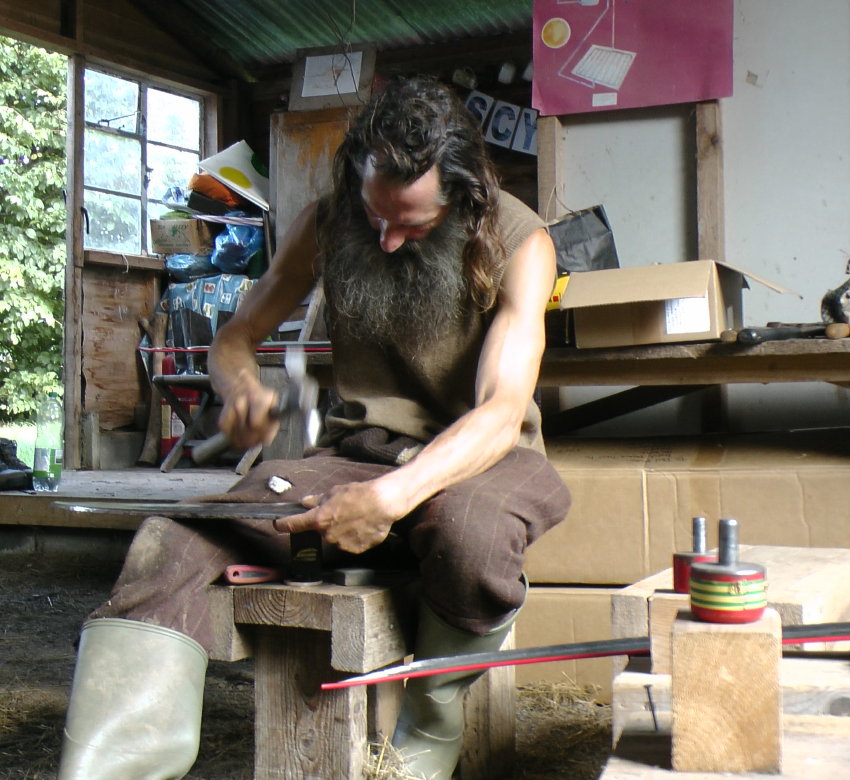 For Brits who may never even have heard the word before, (like me!) a jig of simple metal parts make this process a little easier to practice and less intimidating…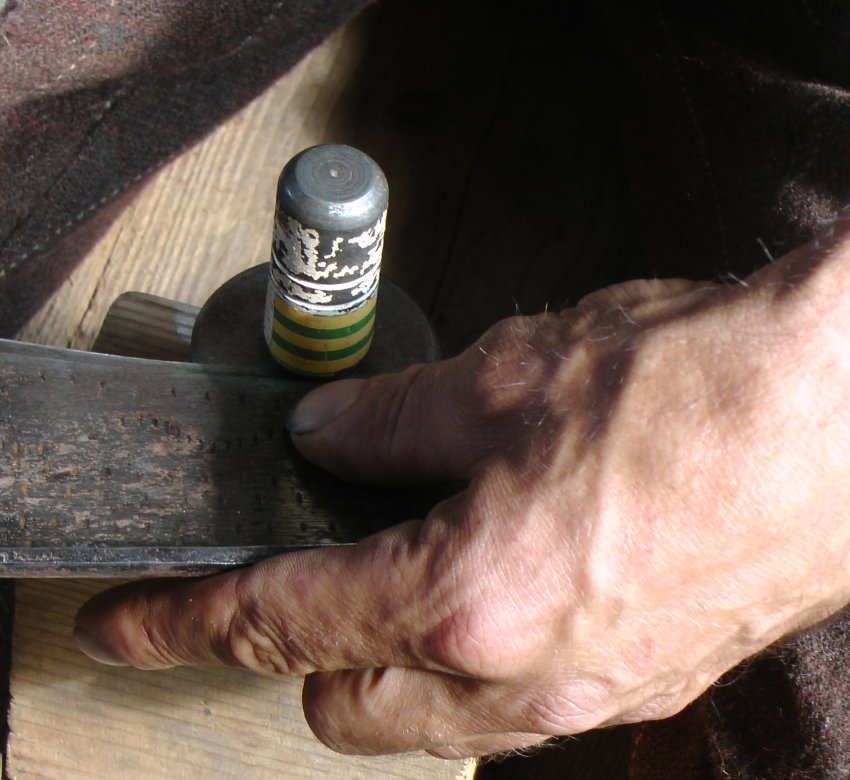
So all in all a very interesting and valuable day. Philip has scythes and necessary kit for sale – all 4 course participants were sufficiently impressed to walk away with one! Excellent value for money, and whilst I shall never use a manual scythe extensively on our several acres, I reckon it has a place around our smallholding and garden for tidying up, and ditch/bank work where the alternative of a strimmer is awkward, noisy and slower.
But in addition many of the ideas involved in manual scything are useful prompts for thinking about how any particular wildflower meadows can be managed. Of course many of the county’s meadows would have developed floral diversity precisely because of such low key human intervention over the decades.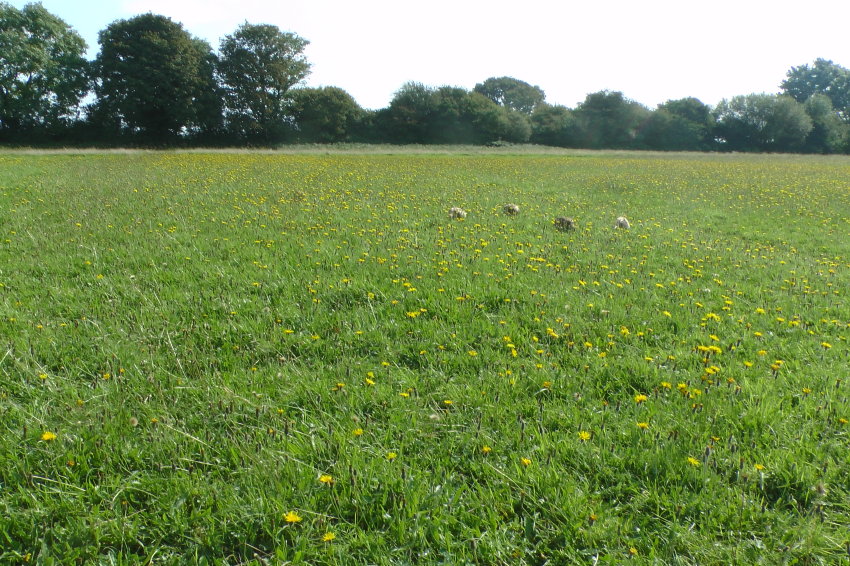
So many thanks to Philip and Melanie for a a great day, and one of my abiding memories will be of part of their meadow, cut earlier in the year, and now re-flowering in mid September in a sea of yellow hawkbits, amongst which ducks and tens of Silver Y moths danced from flower to flower.
Philip cuts hay in batches right the way from May to September, so look out for when he holds courses next year, if you’d like to give it a try.
A final reminder about the Carmarthenshire Meadows Group meeting at Myddfai on Saturday October 8th. See the events page for more details, and hope that you can make it.
Thanks for reading.
 Carmarthenshire Meadows Group - Grŵp Dolydd Sir Gaerfyrddin
Pingback: Meadowed Out and Good Hair Days; Kapoored Constructions – Anished Arachnids. | thegardenimpressionists