Many thanks to Andrew for this update on some of his hedge laying, at Ffos y Broga:
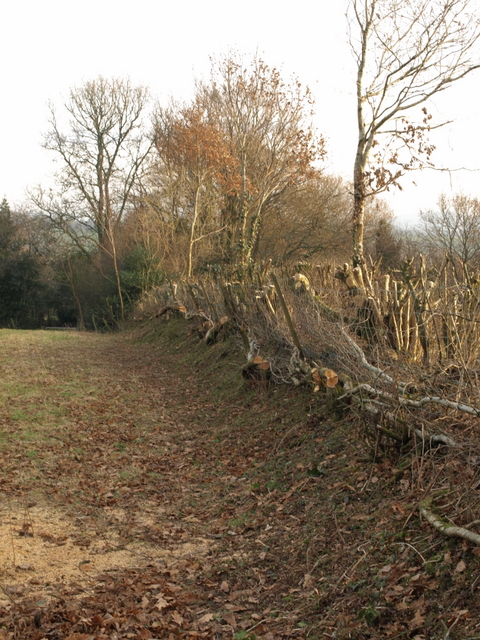
Last autumn we decided to put the treeline on the S side of our middle field back to a hedge. It had clearly been kept as a hedge up to 10-15 years before as the flail line was visible (only thinner growth above the line). There are some pictures on a previous post:
https://carmarthenshiremeadows.com/2016/12/08/meadow-hedge-management/
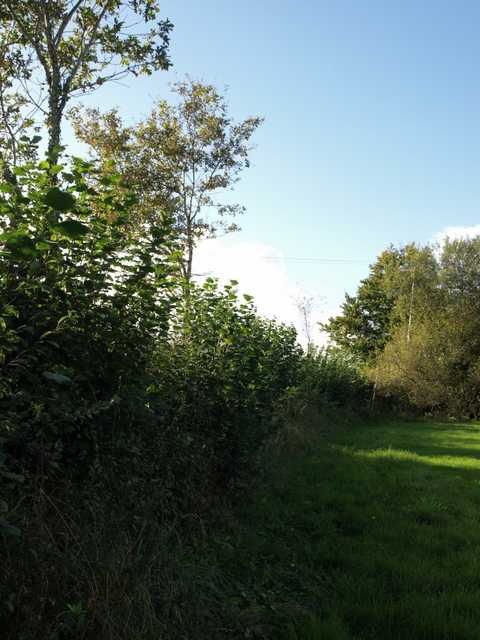
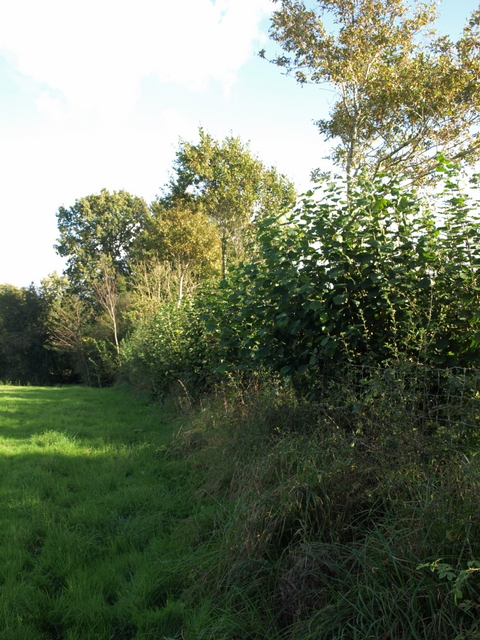
We’ve now taken a couple of photos from the same viewpoints to see how the hedge has developed in 10 months, and it’s quite surprising how much growth there has been since last December.

OLYMPUS DIGITAL CAMERA
OLYMPUS DIGITAL CAMERA
Most of the growth is from the now horizontal stems of the laid hazel, blackthorn, and hawthorn although the blackthorn especially sends out suckers from roots not only on the bank but quite a way out in the field as well, we’ll see if it survives the annual hay cut and the aftermath sheep grazing.
OLYMPUS DIGITAL CAMERA
OLYMPUS DIGITAL CAMERA
Andrew Martin.
_______________
I was happy to get conclusive proof this autumn that the animal that ripped up one patch of our upper hay meadow last year, and this year has already done 10 times as much damage, is indeed a badger. 


Intermittently, over our upper hay meadow, the badger has, off and on, continued with its pasture remodelling. My friend, neighbour and serious naturalist photographer Dave Bevan (who took the Dormice photos featured in the previous post) cheerfully told me he’d never seen such dramatic badger damage before…. I’ve had periods of replacing turves, and as fast as I do, a new area seems to have been disturbed. But I’ve now found what might be conclusive evidence of what it’s hunting..
These grubs have been found twice, after we’ve flipped over big ripped slabs of turf. They’re almost certainly the larval forms of the Garden Chafer, which this year was obvious in quite large numbers flying over this field. 

 Of course you could argue that the fact that these orange headed larvae were found by us means that they weren’t what the badger was actually after. However, assuming some would have been missed by the predator, and that they’re quite slow moving, I would think they’d make a very high protein supplement to an autumnal diet including plenty of blackberries, and other less nutritious offerings.
 Perhaps we should be delighted that the grubs indicate that the chafers assessed our hay meadow as a safe and suitable nutritious location for their larvae to develop, and so laid plenty of eggs here. The badgers had to cross several neighbouring fields to reach us with no signs of damage in any of them. This damage seems to have stopped over the last fortnight or so, and if you read further about the chafer life cycle it probably relates to the grubs moving much deeper in the soil in preparation for over wintering, and thus moving out of the easy access zone for the badger.
I’m now realising that we should perhaps be even more grateful for what these large numbers of chafers might indicate about the local environment. One of the most worrying pieces of citizen science I’ve ever read has just been published.
The result of 27 years of collated study of total flying insect biomass in 63 German Nature Protection Reserves, it highlights an apparent and shocking 76% to 82% decline in flying insects over this 27 year period. The measurements were made with malaise traps to monitor total flying insect populations between March and October to give a total of 96 different location/year sets of data. Since weather records were also made over the same time, and there are no simple explanations to account for such a drastic decline, the suspicion is that it relates to possibly much wider habitat loss in the surrounding environment, pesticide use, and climate change.
For the whole paper, by the authors
http://journals.plos.org/plosone/article?id=10.1371/journal.pone.0185809
Of course as with the badger example above, insects at all stages of their lives underpin much of life on earth as we know it, and such a dramatic biomass decline is really disturbing
Julian Wormald
______________________
Thanks for reading, and remember I’m always happy to receive any suitable articles or photos to include as blog posts. Please send them to me…
Julian Wormald… website@carmarthenshiremeadows.com
__________________________
 Carmarthenshire Meadows Group - Grŵp Dolydd Sir Gaerfyrddin
Pingback: Insect Biomass Decline – Follow Up; Provisional Programme for 2018; | Carmarthenshire Meadows Group – Grŵp Dolydd Sir Gaerfyrddin
Pingback: Signs of Spring – Carmarthenshire Meadows Group